Why do I get so sleepy driving right after my night shift?
Shift workers are at high risk for drowsy driving crashes after a night shift due to circadian rhythm disruption. Learn how in-cabin cameras detect night shift driving fatigue.
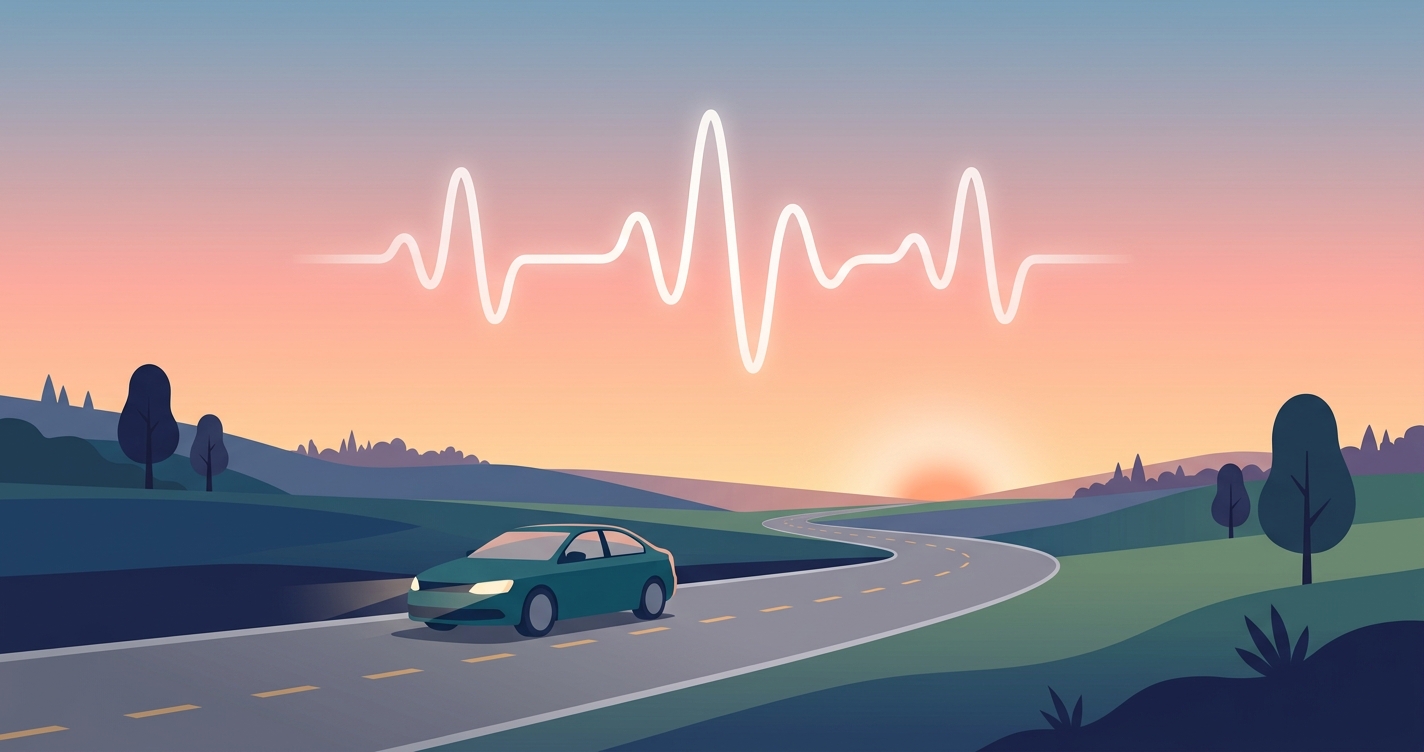
The drive home after a night shift is uniquely dangerous. Even with a full night's work behind you and the sun rising, your body is entering a period of maximum sleepiness. This isn't just about being tired; it's a physiological event rooted in your natural circadian rhythm. For the millions of Americans who work overnight shifts, understanding the science behind this risk is the first step toward mitigating it. The most dangerous part of a night shift worker's day is often the commute home, a period when the brain is hard-wired for sleep, regardless of the individual's willpower or coffee intake. This phenomenon is a major factor in night shift driving fatigue.
"A study of post-night-shift commutes found that drivers had a dramatically increased risk of a crash or near-crash event. In 16 observed post-shift drives, 11 near-crashes occurred, compared to zero after a normal sleep period."
- Dr. Michael L. Lee, et al. (2016), Proceedings of the National Academy of Sciences
The science of night shift driving fatigue
The primary culprit behind post-shift drowsiness is the human body's internal clock, or circadian rhythm. This internal pacemaker regulates a 24-hour cycle of sleepiness and alertness. A key study by Michael L. Lee, Charles A. Czeisler, and their colleagues from Harvard Medical School and Brigham and Women's Hospital, published in 2016, highlighted the profound risks. They found that the window between 4:00 AM and 6:00 AM is when the circadian drive for sleep is strongest. For a night shift worker heading home at dawn, this biological "low point" coincides perfectly with their commute, creating a perfect storm for a drowsy driving incident.
This is more than just feeling tired. The CDC notes that being awake for 17 consecutive hours produces impairment equivalent to a blood alcohol concentration (BAC) of 0.05%. After a long night shift, many workers easily cross this threshold. The body is essentially sending powerful signals to the brain to initiate sleep, which can lead to microsleeps - brief, involuntary episodes of sleep lasting from a fraction of a second to several seconds. Behind the wheel, a microsleep of just a few seconds is long enough to cause a catastrophic accident. This is the core danger of night shift driving fatigue: it can strike even when a driver believes they are alert enough to operate their vehicle safely.
| Subjective Feeling | Physiological State (Circadian Trough) |
|---|---|
| "I'm just a little tired." | Body is entering a prescribed low-alertness phase. |
| "I can push through it." | Impaired cognitive function, similar to alcohol intoxication. |
| "I just had coffee." | Stimulants offer temporary relief but don't reverse the underlying biological drive for sleep. |
| "I feel fine." | High risk of sudden, uncontrollable microsleeps. |
- Reduced vigilance and slower reaction times.
- Impaired decision-making and judgment.
- Increased likelihood of lane deviation.
- A false sense of alertness, especially as daylight increases.
Industry applications: protecting drivers around the clock
For fleet management companies and automotive OEMs, addressing night shift driving fatigue is a critical safety and operational priority. The solution lies in technology that can detect the physiological signs of drowsiness in real time, providing an objective backstop when a driver is unable to recognize their own impairment.
How cameras detect drowsiness
Modern Driver Monitoring Systems (DMS) use small, in-cabin cameras, often employing infrared (IR) light to work in all lighting conditions. These systems are not recording video for surveillance; instead, they use sophisticated AI algorithms to analyze the driver's face and eyes for tell-tale signs of fatigue. Key metrics include:
- PERCLOS (Percent Eyelid Closure): This measures the percentage of time the eyes are closed over a specific window. A high PERCLOS score is a strong indicator of drowsiness.
- Head Position: The system detects head nodding or a slumped posture, classic signs of a driver fighting off sleep.
- Yawn Frequency: While not always a sign of sleepiness, an increased rate of yawning is a correlated indicator that the system flags.
- Gaze Direction: The system also monitors for distraction, but a fixed, "thousand-yard" stare can also be a precursor to a microsleep.
When the AI detects a pattern consistent with fatigue, it can trigger an alert, such as an audible chime, a visual warning on the dashboard, or a haptic vibration in the seat or steering wheel.
Current research and evidence
The effectiveness of camera-based DMS is supported by a growing body of research. The National Institute for Occupational Safety and Health (NIOSH) has extensively studied the risks of fatigue in the workplace, including for professional drivers. Their research confirms that the hours immediately following a night shift are the most dangerous for commute-related incidents. The 2016 PNAS study by Lee and Czeisler used "infrared reflectance oculography" to track eye movements, a technology that is a direct ancestor of modern in-cabin camera systems. Their findings provide a clear evidence base for using this technology to identify the very behaviors that precede a fatigue-related crash.
The future of driver safety
The next generation of in-cabin monitoring will move beyond simple alerts. The data from a DMS can be integrated with a vehicle's Advanced Driver-Assistance Systems (ADAS). For instance, if the camera detects severe fatigue, the vehicle could automatically increase the follow distance to the car ahead or adjust the sensitivity of the lane-keeping assist system. For fleet managers, this data provides a powerful tool to identify at-risk drivers, adjust schedules, and implement fatigue management programs. The goal is not just to alert a tired driver, but to create a responsive safety ecosystem within the vehicle and the broader fleet operation.
Frequently asked questions
Q: Why do I feel sleepy driving home even if I slept well the day before? A: This is due to your circadian rhythm. Your body has a natural, pre-programmed dip in alertness in the early morning (around 4-6 AM). Even if you are well-rested, your body is physiologically primed for sleep during this window, making your post-night-shift commute a high-risk time.
Q: Can I trust myself to know when I'm too tired to drive? A: Research shows that self-assessment of fatigue is often unreliable. Drowsiness impairs judgment, which includes your ability to judge your own level of impairment. Drivers often experience microsleeps without realizing they were asleep, which is why objective, technology-based detection is becoming so important.
Q: Isn't drinking coffee enough to stay awake? A: While caffeine is a stimulant that can temporarily increase alertness, it does not eliminate the underlying physiological drive to sleep. It can provide a false sense of security, and its effects can wear off unexpectedly during a drive, leading to a sudden onset of severe drowsiness. Sleep is the only true cure for fatigue.
Circadify is at the forefront of developing camera-based AI that can identify the subtle signs of night shift driving fatigue, helping protect drivers during their most vulnerable moments. For fleet operators and automotive partners looking to build the next generation of in-cabin safety, our technology offers a pathway to a safer future. Learn more about our advanced solutions for the automotive industry by visiting us at circadify.com/custom-builds/automotive-cabin.