
Why are new cars starting to watch the driver's face?
Why are new cars driver facial monitoring systems appearing now? A research-based look at safety rules, distraction data, and camera-based driver monitoring.
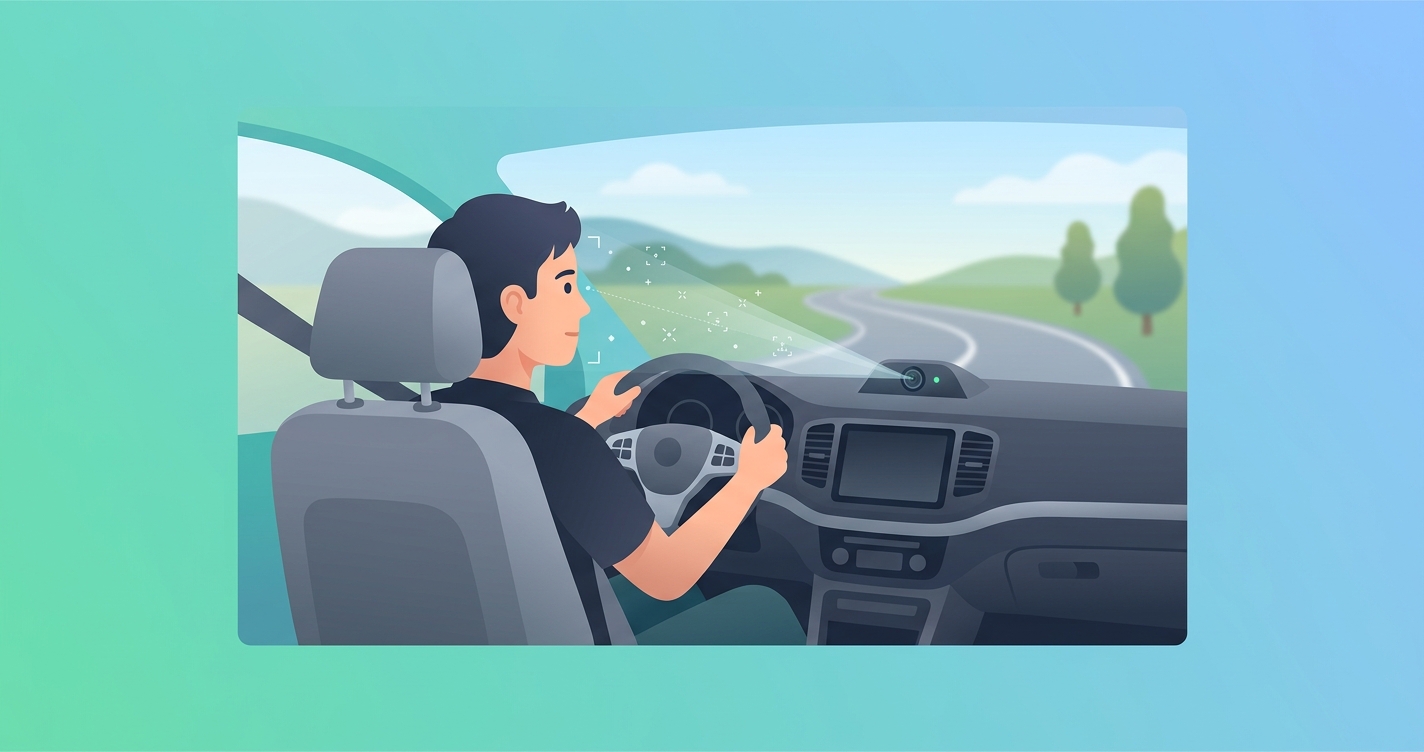
Why are new cars starting to watch the driver's face?
If you have noticed more headlines about cabin cameras, you are not imagining it. New cars driver facial monitoring systems are moving from niche premium features into the mainstream because modern vehicles now need a better way to tell whether the human behind the wheel is alert, distracted, drowsy, or completely checked out. That shift is partly about technology getting cheaper, but the bigger reason is simpler: assisted driving features are spreading at the same time regulators and safety programs are asking harder questions about driver attention.
"In 2021, 3,522 people were killed in motor vehicle crashes involving distracted drivers." — National Highway Traffic Safety Administration, Distracted Driving in 2021
Why new cars driver facial monitoring is showing up now
For years, many automakers relied on indirect clues to estimate driver engagement. Steering wheel input was the classic example. If the driver touched the wheel, the system assumed the driver was paying attention. That turns out to be a weak proxy.
AAA's 2022 driver monitoring evaluation found that direct systems using a driver-facing camera responded to disengaged driving around 50 seconds sooner than indirect systems in Level 2 vehicles. In the same study, drivers stayed engaged about five times more often when the vehicle used direct monitoring. That matters because the whole point of a partial automation system is not to prove the car can steer on its own for a while. It is to make sure the driver can step back in when the system reaches its limits.
There is also a policy reason for the change. Euro NCAP's 2026 protocol updates raise the bar for occupant and driver monitoring, with more attention to distraction, drowsiness, impairment, and unresponsiveness. In the EU, General Safety Regulation rollout has also pushed new vehicles toward Driver Drowsiness and Attention Warning systems, with stricter distraction requirements following behind. When top safety scores and market access start depending on cabin sensing, driver monitoring moves from a feature decision to a platform requirement.
A third reason is cost and architecture. Once an interior camera is already present for attention tracking, product teams start asking what else that sensor can support. The same cabin hardware can contribute to seatbelt checks, occupant classification, child presence detection, and, in some development programs, broader in-cabin health sensing.
What the camera is actually looking for
These systems usually are not "reading your mind," despite how that framing sounds in consumer headlines. Most production driver monitoring stacks are looking for a narrower set of signals:
- Eye gaze and whether the driver is looking at the road
- Blink rate and prolonged eyelid closure
- Head pose and head-turn direction
- Signs of distraction during assisted driving
- Lack of response during escalating alerts
David F. Dinges and Randolph C. Grace helped establish one of the field's most durable fatigue measures in their 1998 work on PERCLOS, which tracks the percentage of time the eyelid covers the pupil. That research still shows up in the design logic of modern fatigue detection, even though commercial systems now combine it with gaze, head movement, and contextual vehicle data.
The safety logic behind facial monitoring
The most important change in new cars is not that cameras got better. It is that the safety question changed.
A conventional warning feature only needs to know whether there is risk outside the vehicle. A modern assisted-driving stack needs to know two things at once:
- Is a road hazard developing?
- Is the driver ready to respond to it?
Muhammad Qasim Khan and Sukhan Lee wrote in their 2019 Sensors survey that driving assistance works best when driver state, vehicle state, and environmental context are treated as connected parts of one loop. That idea has become much more practical in the Level 2 era. If a vehicle sees lane markings clearly but also sees the driver looking down at a phone, the warning strategy should change. If the driver does not respond, the fallback strategy may need to change too.
Why direct camera monitoring is replacing indirect checks
| Approach | What it measures | Typical weakness | Why automakers are moving on |
|---|---|---|---|
| Steering-wheel torque checks | Whether the driver applies light input | Easy to fake without real attention | Does not show where the driver is looking |
| Timed hands-on reminders | Whether the driver touches the wheel after prompts | Can become a routine compliance gesture | Confirms touch, not supervision |
| Direct driver-facing camera | Gaze, eyelids, head pose, alertness signals | Needs careful tuning for lighting and privacy | Better matches real supervision and takeover readiness |
| Broader occupant monitoring stack | Driver state plus cabin context | More complex validation and policy questions | Supports future safety and in-cabin sensing programs |
This is why consumers suddenly feel like cars are "watching" them more closely. The vehicle is being asked to verify supervision, not just request it.
Industry applications
Level 2 passenger vehicles
This is where facial monitoring has become most visible. Lane centering, adaptive cruise, and traffic-jam features create a strange human-factors problem: the car is doing enough that the driver may mentally drift, but not enough that the driver can stop supervising. A cabin camera helps the system detect that gap.
The practical use case is simple. If the driver looks away for too long, the system escalates with visual, audio, or haptic prompts. If the driver still does not respond, some vehicles can reduce speed or prepare a minimum-risk maneuver.
Fleet and commercial programs
Commercial buyers care about a slightly different outcome. They want fewer severe fatigue events, fewer distraction-related incidents, and cleaner operational data. In those settings, facial monitoring can connect what happened outside the vehicle with what the driver was doing inside the cab.
That matters for post-event review. A hard-braking event means one thing if the driver was alert and scanning the road. It means something else if the driver had already shown repeated off-road glances or signs of drowsiness.
Insurance and risk analytics
Insurers and fleet safety teams are increasingly interested in richer context, not just crash counts. Camera-based monitoring can support a more detailed picture of near misses, alert patterns, and recurring risk windows such as overnight routes or end-of-shift fatigue. It will not replace telematics, but it can make telematics easier to interpret.
Current research and evidence
The evidence base behind this shift is stronger than the marketing language around it.
NHTSA's Distracted Driving in 2021 report put the U.S. toll at 3,522 deaths in crashes involving distracted drivers. That is the public-safety backdrop for the whole category. Automakers do not need every distracted-driving crash to be preventable by a cabin camera for the case to become compelling. They only need regulators, ratings agencies, and product planners to agree that attention measurement is now part of modern safety design.
AAA's 2022 study on driver monitoring systems added an important applied result. In four Level 2 vehicles, direct monitoring systems using a camera issued warnings much earlier than indirect systems and kept drivers engaged far more consistently. That did not solve the automation problem, but it did show that direct monitoring is harder to game.
The academic story goes back further. Dinges and Grace's 1998 PERCLOS work gave the industry one of its most cited drowsiness measures. Khan and Lee's 2019 survey in Sensors argued for treating the driver, vehicle, and environment as one monitoring problem rather than separate silos. Those two reference points sit at opposite ends of the stack: one focuses on a specific fatigue indicator, the other on integrated system design.
A quick comparison of the evidence driving adoption
| Source | Year | Institution | What it says for the market |
|---|---|---|---|
| Dinges and Grace, "PERCLOS: A Valid Psychophysiological Measure of Drowsiness" | 1998 | University of Pennsylvania / FHWA-NHTSA fatigue research program | Eyelid-closure metrics can track measurable alertness decline |
| Khan and Lee, Sensors survey | 2019 | Sungkyunkwan University | Driver monitoring should be linked with vehicle and environmental context |
| AAA, Effectiveness of Driver Monitoring Systems | 2022 | AAA Foundation / AAA research program | Direct camera monitoring outperformed indirect checks in Level 2 supervision |
| NHTSA, Distracted Driving in 2021 | 2023 report on 2021 data | U.S. DOT / NHTSA | Distraction remains a large enough safety burden to justify stronger in-cabin safeguards |
| Euro NCAP protocol updates | 2026 cycle | Euro NCAP | Top safety scores increasingly depend on better driver monitoring and response logic |
One thing I keep coming back to is that cabin cameras are not spreading because automakers suddenly became fascinated with faces. They are spreading because assisted driving exposed how weak the old supervision checks really were.
The future of driver facial monitoring in cars
The next phase probably will not stop with fatigue or distraction prompts. It will move toward confidence management across the cabin stack.
That means several things:
- Driver monitoring will become more tightly linked to ADAS behavior
- Unresponsive-driver handling will get more attention in validation programs
- Occupant monitoring and driver monitoring will share more hardware
- In-cabin sensing may expand toward stress, cardiac-risk, or broader wellness context where programs can justify it
This does raise legitimate privacy questions, and consumers are right to ask them. But from an engineering and policy perspective, the direction looks clear. Once the car is helping with more of the driving task, it also needs a better read on whether the human is still present in any meaningful sense.
For OEMs and Tier-1 teams, the real design question is no longer whether to include some form of monitoring. It is how direct, how continuous, and how integrated that monitoring should be.
Frequently Asked Questions
Are new cars really recording the driver's face all the time?
Not necessarily. Many systems analyze gaze, head pose, or eyelid behavior in real time without treating the cabin camera like a consumer recording device. Exact implementation depends on the vehicle, market, and data policy.
Why is facial monitoring more common in cars with assisted driving?
Because partial automation creates handoff risk. If the vehicle can steer or pace traffic for a while, it also needs a way to check whether the driver is still ready to supervise and take over.
Is driver facial monitoring mainly about fatigue?
No. Fatigue is one major use case, but current systems also look for distraction, prolonged off-road glances, unresponsiveness, and in some future programs broader signs of impairment.
Are regulators pushing automakers toward these systems?
Yes. Euro NCAP's 2026 protocol direction and EU safety rules around drowsiness and attention warning systems are major reasons cabin monitoring is becoming harder to avoid.
For automotive teams exploring camera-based driver monitoring and broader in-cabin sensing, Circadify is developing custom programs for automotive cabin monitoring. For more Quick Scan Vitals context, see our coverage of driver monitoring system regulations and camera-based driver monitoring systems.