What happens if I have a panic attack while driving on the freeway?
Explore how camera-based driver monitoring systems can detect the physiological signs of a panic attack and trigger in-cabin interventions to ensure driver safety.
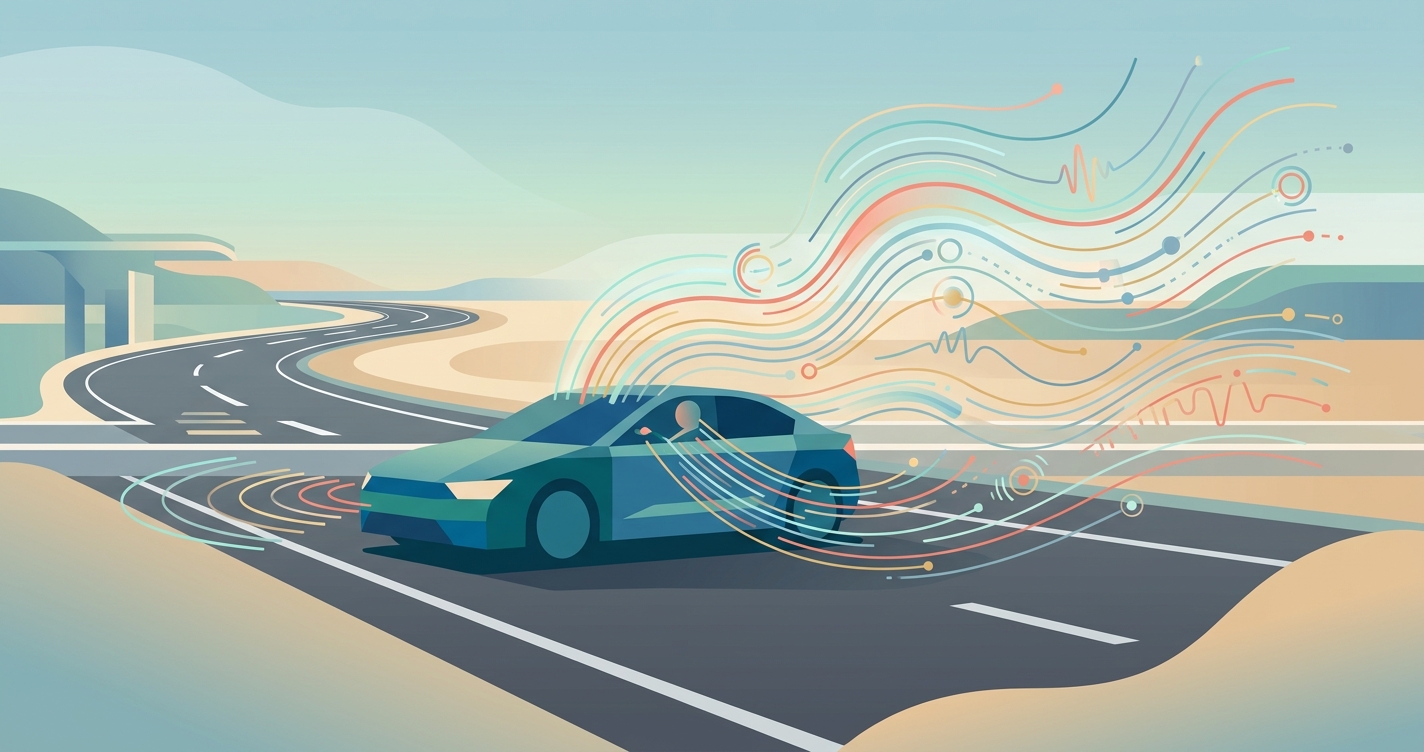
For any driver, the thought of losing control of their vehicle on a busy freeway is a frightening prospect. For someone prone to anxiety, this fear can be magnified by the possibility of a sudden, overwhelming panic attack behind the wheel. The scenario presents a critical challenge for automotive safety engineering: how can a vehicle support a driver who is experiencing an acute, non-physical medical event? The answer lies in advanced in-cabin sensing, where systems for panic attack while driving detection are becoming a new frontier in driver monitoring and vehicle safety.
"Panic disorder affects an estimated 6 million adults, or 2.7% of the U.S. population, with occurrences that are often spontaneous and unexpected."
- Anxiety and Depression Association of America (ADAA)
The physiology of panic and the case for in-cabin detection
A panic attack is a sudden episode of intense fear that triggers severe physical reactions when there is no real danger or apparent cause. This response is governed by the sympathetic nervous system, which initiates the "fight-or-flight" cascade. Physiologically, this manifests as a rapid heart rate, a sharp decrease in Heart Rate Variability (HRV), pupil dilation, rapid, shallow breathing (hyperventilation), and often, profuse sweating. For a driver, these symptoms are profoundly dangerous, leading to cognitive tunneling, impaired motor control, and a delayed ability to react to road hazards.
The traditional approach to driver monitoring has focused on drowsiness and distraction, but these systems are not designed to interpret the subtle precursors of a panic event. This is where camera-based vital signs monitoring becomes essential. Using a technology called remote photoplethysmography (rPPG), an in-cabin camera can detect minute changes in light reflection from the driver's skin. These changes correspond directly to the pulsing of blood through subcutaneous vessels. Advanced algorithms can analyze this rPPG signal in real-time to extract a continuous stream of physiological data, including:
- Heart Rate (HR): A sudden, sustained spike in HR is a primary indicator of a panic event.
- Heart Rate Variability (HRV): A significant drop in HRV indicates the body is under extreme stress and the autonomic nervous system is out of balance.
- Respiration Rate: Changes in breathing patterns can also be inferred from the rPPG signal and other visible cues.
Research has shown this method to be highly effective. A 2023 study on rPPG analysis and deep learning techniques for stress detection demonstrated accuracy as high as 95.83% in classifying stress levels based on camera-derived data (Gouse et al., 2023). This capability for panic attack while driving detection transforms the vehicle's camera from a simple monitoring tool into a proactive health and safety device.
| Feature | Camera-Based Monitoring (rPPG) | Wearable-Based Monitoring | Contact-Based Monitoring (Steering Wheel/Seat) |
|---|---|---|---|
| Principle | Measures blood volume changes via camera | ECG/PPG sensors in a watch or band | ECG or GSR sensors embedded in surfaces |
| User Friction | None; seamless and non-invasive | High; requires driver to own/wear a device | Low to moderate; requires consistent hand/body contact |
| Data Richness | Heart Rate, HRV, Respiration Rate, Gaze | Heart Rate, HRV, EDA/GSR, Skin Temp | Heart Rate, HRV, Galvanic Skin Response (GSR) |
| Integration | Requires a high-quality camera and processing unit | Relies on Bluetooth/NFC pairing and data sharing protocols | Requires wiring and sensor integration into cabin materials |
| Use Case | Universal driver and occupant monitoring | Opt-in health tracking for individual drivers | Driver-specific health alerts |
Industry applications: from detection to intervention
Detecting a panic event is only the first step. The true value for automotive OEMs and Tier-1 suppliers lies in creating an ecosystem of automated responses that support the driver and mitigate risk. These Human-Machine Interface (HMI) strategies can be tiered based on the severity of the detected event.
### environmental and sensory interventions
The first level of response can involve subtly altering the cabin environment to create a calming atmosphere.
- Audio Modulation: The system could automatically lower the volume of aggressive music or podcasts and transition to calming soundscapes, such as low-frequency binaural beats.
- Lighting Adjustment: Interior ambient lighting can shift to a calming color, like a soft blue or green, while dimming bright infotainment screens to reduce sensory overload.
- Climate Control: Activating seat ventilation or slightly lowering the cabin temperature can provide a haptic and thermal sensation that helps ground the individual.
### guided assistance and active support
If physiological metrics continue to indicate a high level of distress, the system can escalate to more active interventions.
- Guided Breathing: The main infotainment screen or a heads-up display could initiate a simple visual prompt for a guided breathing exercise, such as the 4-7-8 method, to help the driver regulate their breathing and heart rate.
- Voice Assistant Interaction: The in-vehicle assistant could proactively ask, "I've noticed your stress level is high. Would you like me to help you find a safe place to pull over?"
- Remote Operator Connection: In severe cases, the vehicle could offer to connect the driver to a human operator or emergency service via its telematics system.
### ADAS and Vehicle Control Integration
The most advanced response involves using the vehicle's Advanced Driver-Assistance Systems (ADAS).
- Increase Following Distance: The system can command the Adaptive Cruise Control (ACC) to increase the following distance from the car ahead, creating a larger safety buffer.
- Lane Keeping and Centering: Enhanced lane-keeping assist can provide stronger support to prevent unintentional lane departure.
- Automated Safe Stop: In vehicles equipped with higher levels of automation, the system could identify a safe shoulder or rest area, navigate the vehicle to a stop, activate hazard lights, and notify emergency responders.
Current research and evidence
The development of robust panic attack while driving detection is an active area of automotive research. Studies such as the "AI Innovations in rPPG Systems for Driver Monitoring" review (IEEE, 2023) highlight the rapid progress in applying deep learning to solve the core technical challenges. Researchers are focused on creating algorithms that are resilient to real-world driving conditions, such as:
- Motion Artifacts: Compensating for head movements and vibrations that can corrupt the rPPG signal.
- Illumination Changes: Ensuring accuracy under variable lighting, from direct sunlight to shadows and nighttime driving, often using near-infrared cameras.
- Specificity: Differentiating a genuine panic attack from other high-arousal states, such as extreme anger (road rage) or excitement.
The future of in-cabin health monitoring
The ability to detect and respond to a driver's panic attack is part of a larger industry shift towards a holistic view of in-cabin health, safety, and wellness. As vehicles move towards higher levels of automation (Level 3 and beyond), understanding the driver's physiological and cognitive state will be critical for ensuring safe transitions of control between the human and the machine. This technology is not about replacing the driver's judgment but augmenting their capabilities and providing a safety net for unpredictable medical events. The same underlying technology, like that found in apps such as the tryvitalsapp, can provide personal health insights, and is now being integrated into the very fabric of the vehicle.
For automotive manufacturers, mastering this technology is not just a safety imperative but also a significant differentiator. It addresses a deep-seated driver fear and offers a tangible sense of security and care that will define the next generation of the driving experience. This is a complex space requiring deep expertise in signal processing, machine learning, and automotive systems.
Circadify is at the forefront of developing camera-based solutions for driver vital signs monitoring. If your organization is exploring in-cabin health and safety systems, you can learn more about our custom programs and how we address challenges like panic attack while driving detection by visiting our automotive solutions page. Inquire at circadify.com/custom-builds/automotive-cabin.