Top 5 DMS Vital Signs for Preventing Fleet Accidents
What are the top 5 DMS vital signs for preventing fleet accidents? Learn how in-cabin health monitoring predicts fatigue before microsleeps occur.
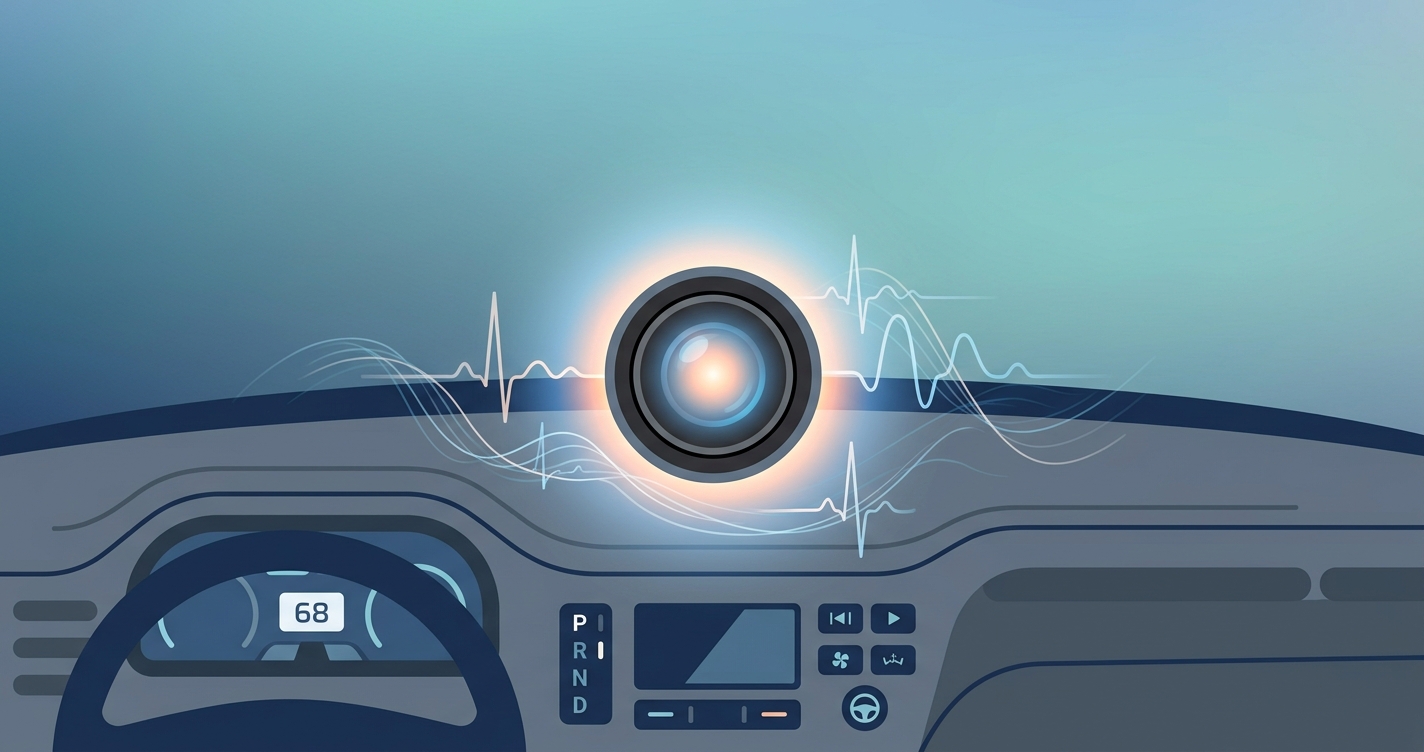
The transportation industry is transitioning from reactive safety measures to predictive physiology. For years, commercial vehicle safety depended on lagging indicators like steering wheel drift, sudden braking, or lane departures. By the time these telemetry events register on a dashboard, the vehicle is already in a dangerous state. Today, the focus has shifted toward fleet driver health monitoring. The Federal Motor Carrier Safety Administration reports that fatigue is a contributing factor in approximately 13 percent of all serious commercial motor vehicle crashes. For a commercial trucking company, a single severe collision can cost millions in liability, vehicle replacement, and disrupted supply chains. To prevent these catastrophic accidents, engineering teams and fleet safety directors are utilizing inward-facing cameras equipped with remote photoplethysmography (rPPG). These optical sensors measure physiological data continuously, identifying the early onset of exhaustion long before a microsleep occurs.
"Driver fatigue is cited as a contributing cause in approximately 13 percent of all serious commercial motor vehicle crashes, making continuous physiological monitoring a critical component of modern accident prevention strategies." (Federal Motor Carrier Safety Administration, 2023)
The physiology of fleet driver health monitoring
A driver's body signals impending sleep onset minutes before the eyes actually close. Modern driver monitoring systems analyze these subtle biological shifts without requiring the driver to wear a smartwatch, fitness ring, or chest strap. Using infrared and RGB cameras mounted on the steering column or rearview mirror, these systems track micro-variations in skin color and movement to calculate vital signs. When these physiological metrics are fused with traditional eye-tracking algorithms, safety directors gain a highly accurate predictive window into operator readiness.
1. heart rate variability (hrv)
Heart Rate Variability is the variation in time between consecutive heartbeats measured in milliseconds. It is the most robust non-invasive indicator of autonomic nervous system activity. As a driver transitions from wakefulness to fatigue, sympathetic nervous system activity decreases while parasympathetic activity increases. Research by Ewa Nowara at Mitsubishi Electric Research Laboratories (2020) demonstrated the viability of near-infrared imaging photoplethysmography (iPPG) to capture these cardiac rhythms in dynamic driving environments. A decrease in HRV complexity strongly correlates with the onset of driver drowsiness, acting as a biological countdown to sleep.
2. respiration rate (breathing rate)
Breathing patterns undergo distinct alterations as the brain prepares for sleep. Respiratory rate drops, and the volume of each breath becomes shallower and more highly rhythmic. Ahmed et al. (2025) highlighted in their review of rPPG systems that monitoring respiratory rate alongside cardiovascular metrics creates a multimodal dataset that significantly improves fatigue prediction accuracy. Because the inward-facing camera can detect the subtle chest displacements and pixel color shifts associated with respiration, breathing rate serves as an excellent early warning metric. Monitoring respiration is especially useful for heavy machinery operators who sit relatively still during operation.
3. baseline resting heart rate
While an instantaneous heart rate reading fluctuates with acute stress, caffeine intake, or physical exertion, tracking a driver's baseline heart rate over a shift provides critical context. A gradual, sustained drop in resting heart rate over a multi-hour drive often precedes a microsleep event. Camera-based systems extract this pulse signal by analyzing the absorption of ambient light by hemoglobin in the driver's facial capillaries. Every time the heart pumps, more blood enters the face, absorbing slightly more light. The camera detects this pulse wave continuously.
4. Low-Frequency to High-Frequency Ratio (LF/HF)
The LF/HF ratio is a specific derivation of Heart Rate Variability used to quantify cognitive load and autonomic stress. Low-frequency heart rhythms generally correspond to sympathetic activation, while high-frequency rhythms map to parasympathetic activity. Monitoring the LF/HF ratio allows fleet managers to detect Fatigue. Cognitive overload. When a driver is navigating hazardous weather, tight weigh stations, or complex urban traffic, a spike in the LF/HF ratio indicates acute stress. Conversely, a steep, sustained drop signals dangerous under-arousal and impending drowsiness.
5. blood oxygen saturation (spo2) proxy
Though absolute medical-grade SpO2 requires contact sensors, advanced rPPG algorithms can estimate relative blood oxygenation trends by comparing red and infrared light reflection. For long-haul truck drivers navigating high-altitude mountain passes or driving in poorly ventilated cabins, subtle drops in blood oxygen levels can exacerbate fatigue and impair reaction times. Monitoring these trends helps identify drivers who might be suffering from respiratory constraints that reduce alertness during extended shifts.
Comparing DMS vital signs
| Vital Sign | Detection Method | Fatigue Indicator | Predictive Lead Time |
|---|---|---|---|
| Heart Rate Variability | Camera-based rPPG | Increased parasympathetic tone | 5 to 12 minutes |
| Respiration Rate | Chest movement / rPPG | Shallower, slower breathing | 3 to 5 minutes |
| Baseline Heart Rate | Facial capillary light absorption | Sustained decline | 2 to 4 minutes |
| LF/HF Ratio | HRV frequency analysis | Dropping sympathetic arousal | 5 to 10 minutes |
| Relative SpO2 Trend | Multi-wavelength reflection | Decreased oxygenation | Contextual |
Industry applications for fleet safety
The integration of these vital signs into telematics platforms transforms how commercial fleets manage risk on an operational level.
Predictive dispatching and fleet safety kpis
By analyzing baseline heart rate and HRV trends over consecutive days, fleet management software can identify operators who are chronically fatigued. Dispatchers can adjust routing and schedule mandatory rest periods before the driver even enters the vehicle. This data directly feeds into new fleet safety KPIs, such as:
- Average physiological readiness scores per route.
- Frequency of fatigue warnings triggered per thousand miles.
- Correlation between high-stress routes and biometric exhaustion.
Real-time cabin interventions
When a driver monitoring system detects a critical shift in respiration rate and HRV, the vehicle can initiate automated countermeasures. These interventions include:
- Haptic feedback through the steering wheel or seat to physically rouse the driver.
- Audible alerts and dashboard visual warnings demanding a mandatory break.
- Automated climate adjustments, such as lowering the cabin temperature or adjusting airflow to increase driver arousal.
- Limiting infotainment options to reduce secondary cognitive loads.
Incident reconstruction and liability mitigation
In the event of a collision or near-miss, synchronized physiological data provides safety teams with objective context. Rather than relying solely on dashcam footage or harsh braking telemetry, investigators can review the driver's cognitive load and fatigue levels in the minutes leading up to the event. This protects drivers from false liability claims and helps safety directors understand the exact biological state of the operator at the moment of failure.
Current research and evidence
The scientific foundation for non-contact health monitoring is expanding rapidly. A systematic review by Alnajjar et al. (2025) analyzed recent advancements in artificial intelligence for rPPG systems, concluding that machine learning models have dramatically improved signal extraction under challenging automotive lighting conditions. The study noted that fusing physiological markers, like breathing rate, with traditional behavioral markers, like gaze direction, yields the highest accuracy for drowsiness detection.
Furthermore, clinical research indicates that cardiac activities reflected in HRV can precede the electroencephalogram (EEG) changes associated with sleep onset by an average of 12 minutes. This substantial lead time proves that physiological monitoring is a proactive safety measure, whereas monitoring eyelid closure via PERCLOS is inherently reactive. If a driver's eyes are already fluttering closed, the risk of an accident is imminent, and the vehicle is already moving at highway speeds without a conscious operator. By shifting the detection window backward by several minutes, engineering teams give the vehicle ample time to safely intervene.
The future of fleet driver health monitoring
As automotive architectures evolve toward centralized compute models, the inward-facing camera will serve as a multi-purpose health sensor. Future systems will utilize edge computing to process complex rPPG algorithms entirely within the vehicle, ensuring driver privacy while maintaining real-time responsiveness. This will enable commercial fleets to build robust safety profiles for every operator without installing cumbersome aftermarket hardware or requiring drivers to wear specialized equipment.
We will also see deeper integration between vital sign monitoring and Advanced Driver Assistance Systems (ADAS). If a driver's vital signs indicate severe impairment, the ADAS could automatically increase following distances, activate lane-keeping assist, or safely guide the commercial vehicle to the shoulder of the highway. The ultimate goal is a closed-loop system where the truck actively monitors the operator's biological readiness and dynamically adjusts the vehicle's safety parameters to compensate for human fatigue.
Frequently asked questions
How does a camera measure a driver's heart rate? Cameras use remote photoplethysmography to detect micro-variations in skin color caused by pulsing blood flow. As the heart beats, the volume of blood in facial capillaries changes, altering how much light the skin absorbs and reflects.
Can fleet managers view the live health data of their drivers? System architectures are designed to process vital signs locally on the edge device to protect driver privacy. Usually, fleet managers only receive abstract fatigue or stress scores rather than raw medical telemetry, ensuring compliance with labor and data protection regulations.
Why is heart rate variability better than eye tracking for fatigue detection? Eye tracking relies on measuring eyelid closure or blink rates, which only occur when a driver is already falling asleep. Heart rate variability changes as the autonomic nervous system shifts from alertness to fatigue, providing a predictive warning minutes before physical symptoms appear.
Do these systems work at night or for drivers wearing sunglasses? Modern driver monitoring systems utilize near-infrared illumination, which penetrates standard sunglasses and operates effectively in complete cabin darkness. The near-infrared sensors can still detect the necessary skin reflection and physiological movements.
Preventing catastrophic commercial vehicle accidents requires technology that acts before the driver fails. The team at Circadify is developing software solutions that turn standard cabin cameras into intelligent physiological sensors. If your engineering team is building the next generation of fleet safety platforms and exploring fleet driver health monitoring, learn more about our Automotive program inquiry.