How do I know if I'm too drowsy to keep driving home?
Explore the science behind driver drowsiness detection cameras. Learn how subtle vital-sign and micro-expression changes can signal fatigue before you consciously feel it, preventing accidents.
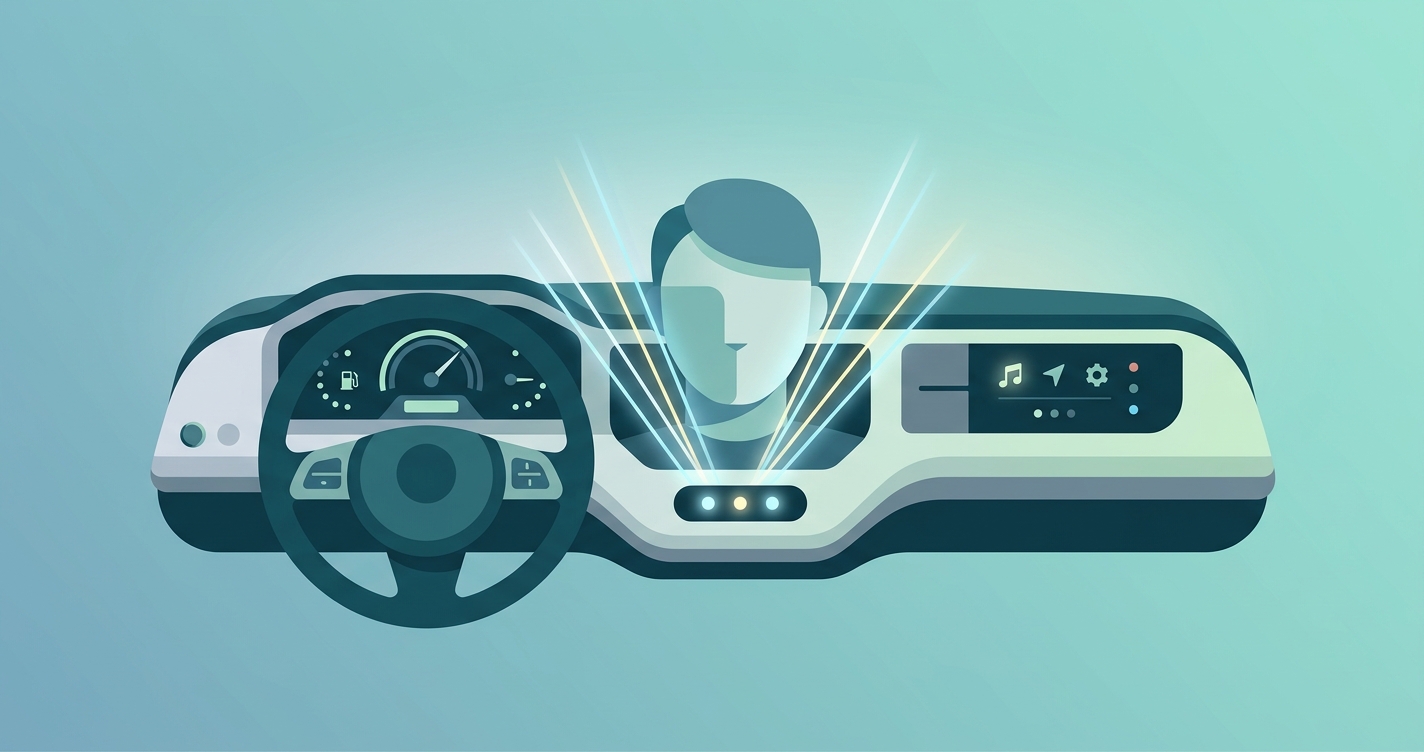
That feeling of heavy eyelids on a long drive home is a common, and dangerous, experience. For many drivers, the question of whether they are "too drowsy" is subjective, often answered only when it's too late. The conventional wisdom to pull over when you feel tired overlooks a critical scientific finding: measurable, involuntary physiological changes and micro-expressions emerge minutes before a driver's own conscious perception of fatigue. By the time you feel tired, your reaction times and cognitive functions have already been significantly impaired. The most advanced in-cabin sensing systems, particularly the driver drowsiness detection camera, are engineered to identify these early, subtle cues to prevent a potential crisis before it begins.
"The U.S. National Highway Traffic Safety Administration (NHTSA) estimates that drowsy driving was responsible for 697 fatalities in 2019, but acknowledges the number is likely much higher due to underreporting. The true number could be closer to several thousand annually."
How a driver drowsiness detection camera works
A driver drowsiness detection camera is an advanced imaging sensor, often using near-infrared (NIR) light, mounted in the vehicle's cabin. It continuously monitors the driver's face and eyes to detect the tell-tale signs of fatigue. Unlike simple systems that only track steering wheel inputs or lane deviations, camera-based systems directly assess the driver's physiological state.
These systems are built on sophisticated computer vision algorithms trained on vast datasets of driver behavior. The core technology analyzes several key indicators in real-time:
- Eye-Gaze and Eyelid Closure: The most critical metric is PERCLOS (Percentage of Time Eyelid is Closed). Pioneering research by Walter Wierwille at Virginia Tech in the 1990s established PERCLOS as a highly reliable indicator of drowsiness. The camera measures the duration and frequency of blinks, as well as prolonged eyelid closures that signify the brain is beginning to disengage from the driving task.
- Head Position and Pose: The system tracks the driver's head orientation. A drooping head or sudden, jerky corrections are classic signs of a "nodding off" event, which is a precursor to a full microsleep.
- Facial Micro-Expressions: Brief, involuntary facial muscle movements, often lasting less than a second, can betray a driver's internal state. A slackening of the jaw or specific patterns around the mouth and eyes are correlated with diminishing alertness.
- Yawn Detection: While seemingly obvious, the system's ability to distinguish a yawn from other mouth movements and correlate it with other fatigue indicators adds another layer of confidence to the assessment.
By integrating these data points, the system builds a comprehensive, real-time profile of the driver's alertness level. This multi-modal approach is far more robust and accurate than relying on a single indicator.
Comparison of drowsiness detection methods
| Method | Technology | Pros | Cons |
|---|---|---|---|
| Vehicle-Based | Lane Departure Warning, Steering Input Analysis | Already integrated in many ADAS packages. | Indirect measure; can be fooled by road conditions or driving style. High rate of false positives. |
| Wearable-Based | Smartwatches, Biometric Sensors | Directly measures physiological data like heart rate. | Requires driver to wear a device; compliance is a major issue. Data can be noisy. |
| Behavioral Camera | driver drowsiness detection camera (basic) | Directly monitors the driver's face for PERCLOS, head nodding. | Can be affected by lighting, sunglasses, or masks. Focuses on late-stage indicators. |
| Physiological Camera | driver drowsiness detection camera (advanced) | Uses remote photoplethysmography (rPPG) to measure vital signs like heart rate, heart rate variability (HRV), and respiration rate without contact. | Provides the earliest possible warning by detecting changes in the autonomic nervous system that precede behavioral signs. |
Industry Applications
For automotive oems and tier-1 suppliers
Integrating a robust driver drowsiness detection camera is no longer a luxury feature but a critical safety and regulatory requirement. Mandates from Euro NCAP and other global bodies are pushing for standard fitment of driver monitoring systems (DMS). Advanced systems that incorporate physiological sensing offer a significant competitive advantage by providing a more reliable and seamless user experience. These systems can:
- Trigger multi-stage alerts (e.g., audible chime, seat vibration, visual warning).
- Suggest navigational changes, such as locating a nearby rest area.
- Interface with the vehicle's Level 2 or Level 3 ADAS to increase following distance or prepare for a safe handover of control.
For fleet management
For commercial and long-haul trucking fleets, driver fatigue is a primary operational risk and a major contributor to insurance costs. A camera-based system provides an objective tool to:
- Monitor driver alertness in real-time and intervene when a driver is at risk.
- Identify drivers with chronic fatigue issues who may need health or scheduling interventions.
- Collect anonymized data to optimize scheduling and route planning to minimize fatigue risk across the entire fleet.
- Reduce accidents, lower insurance premiums, and improve overall safety culture.
Current research and evidence
The scientific consensus is clear: camera-based monitoring is the most effective, non-intrusive method for detecting driver drowsiness. A study published in the Journal of Clinical Sleep Medicine (2015) by researchers from the University of Pennsylvania School of Medicine found that video-based detection of eyelid drooping was highly effective at predicting lapses in performance on a psychomotor vigilance test.
More recently, research has focused on the use of rPPG to extract vital signs from camera data. A 2022 study in the journal Sensors demonstrated that heart rate variability (HRV), a measure of the variation in time between heartbeats, changes in predictable ways as a person becomes drowsy. Low-frequency HRV power increases as the sympathetic nervous system (responsible for "fight or flight") gives way to the parasympathetic system (responsible for "rest and digest"). A driver drowsiness detection camera equipped with rPPG can detect these shifts long before behavioral signs like head nodding become apparent.
The future of driver drowsiness detection
The technology is moving beyond simple alerts. The future of in-cabin monitoring lies in creating a holistic understanding of the driver's state. By combining drowsiness detection with stress and cognitive load assessment, vehicles will be able to create a truly adaptive and personalized safety environment. If the camera detects that a driver is both drowsy and stressed, the vehicle might suggest a calming playlist or adjust the cabin lighting. This shift from a reactive to a proactive safety system is the ultimate goal for automotive engineers and safety experts.
Frequently asked questions
Q: Can these cameras see in the dark or if I'm wearing sunglasses? A: Yes. Most modern driver drowsiness detection cameras use near-infrared (NIR) illuminators and sensors. This allows the system to see your face and eyes clearly even in complete darkness or when you are wearing sunglasses that are transparent to IR light.
Q: What happens to the video data? Is my privacy protected? A: This is a critical consideration for all OEMs and suppliers. In nearly all production systems, the video data is processed in real-time on a dedicated, local chip within the car (edge computing). The raw video is not stored or transmitted. Only the resulting metadata (e.g., "drowsiness level: 8/10") is used by the vehicle's systems.
Q: How is this different from the attention assist in my current car? A: Many early-generation "attention assist" systems rely solely on vehicle dynamics like steering wheel movement. They are inferring your state from the car's behavior. A camera-based system directly observes you, the driver. This makes it far more accurate and less prone to false alarms caused by poor road quality or intentional driving maneuvers.
As the line between driver and vehicle blurs with advancing automation, ensuring the driver is fit to supervise or resume control is critical. Circadify is at the forefront of developing camera-based vital sign monitoring solutions that provide the ground truth of driver state. If you are an automotive OEM, Tier-1 supplier, or fleet operator exploring the next generation of in-cabin safety, learn more about our custom automotive programs at circadify.com/custom-builds/automotive-cabin.