How does a car know I'm stressed before my spouse does?
Modern cars can detect driver stress by using in-cabin cameras to monitor physiological signals like heart rate variability. Learn how this technology works.
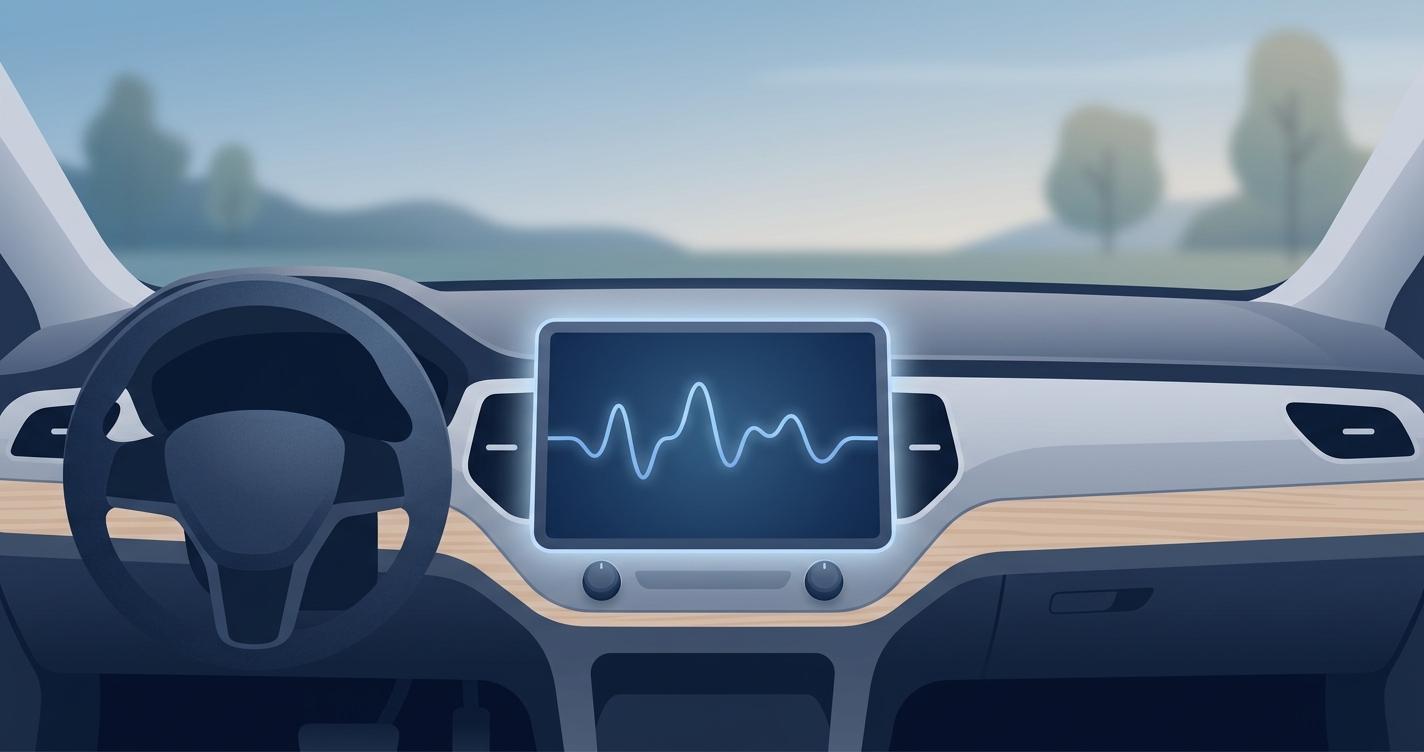
It's a familiar scene: you walk in the door after a difficult commute, and your spouse takes one look at you and asks, "Tough day?" But what if your car knew you were stressed long before you even got home? This scenario is no longer science fiction. Advanced driver monitoring systems (DMS) are rapidly evolving from simple fatigue detection into sophisticated co-pilots that can gauge a driver's emotional and physiological state, including stress. For automotive OEMs, Tier-1 suppliers, and fleet operators, understanding this technology is key to developing the next generation of vehicle safety and occupant experience.
"More than 9 in 10 drivers (96%) admitted to having engaged in aggressive driving at least once in the past year, a behavior closely linked to stress and heightened crash risk."
, AAA Foundation for Traffic Safety, 2024 Traffic Safety Culture Index
How a car can detect driver stress
A vehicle doesn't understand the emotional concept of stress, but it can measure its physical symptoms. When a person experiences stress, their autonomic nervous system (ANS) triggers a "fight or flight" response. This causes measurable changes in the body, such as an increased heart rate, faster breathing, and changes in blood flow. A modern car detect stress driver system is designed to spot these exact physiological cues using discreet, contactless sensors.
The primary technology enabling this is remote photoplethysmography (rPPG), which works through a high-frame-rate camera, often using near-infrared (NIR) light. The camera is aimed at the driver's face, where it detects minute, imperceptible changes in skin color. With each heartbeat, blood is pumped through the capillaries, causing the skin to minutely change in color. The rPPG software analyzes these changes in the video feed to calculate the driver's heart rate, respiration rate, and most importantly, Heart Rate Variability (HRV). HRV is the measure of the variation in time between each heartbeat, and it is widely considered by researchers to be one of the most reliable biometric markers for quantifying mental and physiological stress. A low HRV is a strong indicator of stress, while a higher HRV suggests a more relaxed state.
| Method | Technology Used | Pros | Cons |
|---|---|---|---|
| Camera-Based (rPPG) | In-cabin NIR or RGB cameras, specialized software | Contactless, integrated into the vehicle, requires no driver action | Can be affected by motion, extreme lighting, and certain skin tones |
| Wearable Sensors | ECG sensors (chest strap) or PPG sensors (smartwatch) | Highly accurate, direct physiological measurement | Requires driver to buy/wear a device, potential data privacy concerns |
| Behavioral Analysis | Steering wheel sensors, pedal sensors, GPS data | Utilizes existing vehicle hardware, low implementation cost | Indirect measurement, can be confused with aggressive driving style |
Industry Applications
The ability to reliably detect driver stress opens up new possibilities for enhancing vehicle safety and the in-cabin experience.
Advanced driver-assistance systems (adas)
For OEMs, stress detection is a powerful new input for ADAS. If a system knows the driver is stressed or agitated in dense traffic, it could subtly increase the adaptive cruise control's following distance, heighten the sensitivity of the forward collision warning, or pre-charge the brakes for a quicker response. This creates a more adaptive and intuitive safety net that responds not just to the road, but to the driver's condition.
Fleet management and driver safety
For fleet operators, monitoring stress is a crucial component of a holistic driver wellness program. While individual driver data remains private, aggregated and anonymized data can reveal high-stress routes, times of day, or operational patterns. This allows managers to make data-driven decisions to improve schedules, provide targeted training, or optimize logistics to reduce burnout and improve driver retention and safety. A system that can car detect stress driver patterns across a fleet becomes a powerful tool for operational intelligence.
The personalized cabin experience
Beyond safety, stress detection can unlock a new level of cabin personalization. A car that detects rising stress levels could proactively dim ambient lighting to calming colors, lower the volume of music or podcasts, change the navigation voice to a more soothing tone, or even suggest taking a brief rest at the next exit.
Current research and evidence
The science behind camera-based vital signs monitoring is well-established. Researchers are focused on refining the algorithms to work reliably in the challenging automotive environment. A key area of study is Heart Rate Variability (HRV), which is a direct reflection of the balance between the sympathetic ("fight or flight") and parasympathetic ("rest and digest") branches of the autonomic nervous system.
A significant body of work, such as the 2021 study on "HRVCam" published by researchers affiliated with the National Institutes of Health (NIH), demonstrates methods to achieve robust HRV measurement from video feeds, even with the motion artifacts and changing light inherent to a moving vehicle. This is accomplished through advanced signal processing and machine learning algorithms that can isolate the subtle cardiac pulse signal from environmental noise. These systems are moving from the lab into real-world validation, proving that contactless monitoring can achieve the accuracy needed for safety-critical applications.
The future of driver stress monitoring
The technology to car detect stress driver conditions is still advancing. The next step is sensor fusion, where data from the rPPG camera is combined with inputs from steering wheel sensors, eye-tracking cameras, and even voice analysis to create a comprehensive and highly accurate picture of the driver's state. As vehicles move toward higher levels of automation (SAE Levels 3 and 4), monitoring the driver's readiness to retake control will be critical. Stress and cognitive load detection will be essential for managing the safe transfer of control between the human and the machine.
Ultimately, your car won't just be a mode of transport; it will be an attentive co-pilot, aware of your condition and actively working to keep you safe and comfortable.
Frequently asked questions
-
Is my car spying on me if it monitors my stress levels?
-
Legitimate automotive systems are designed with privacy as a priority. The raw video data is typically processed on a local automotive-grade chip and is not stored or transmitted. The system only outputs anonymized metadata, such as a stress level of "high," to the vehicle's control units. The goal is safety, not surveillance.
-
What is the difference between stress detection and drowsiness detection?
-
While both use similar sensors, they look for different physiological signatures. Drowsiness is characterized by slowing heart rates, specific eye-gaze patterns (e.g., PERCLOS), and head nodding. Stress is often associated with an elevated heart rate, rapid breathing, and low Heart Rate Variability (HRV).
-
Can I get an insurance discount for having a car that detects stress?
-
This is a developing area. As insurance telematics programs become more sophisticated, it is plausible that proven safety features like stress detection could lead to usage-based insurance incentives. However, this is not yet a standard practice.
Circadify is developing production-ready software solutions that enable automotive OEMs and Tier-1 suppliers to integrate recent vital signs monitoring into their next-generation vehicles. If you are developing an in-cabin monitoring program, learn more about our custom solutions for the automotive cabin by visiting our inquiry page at circadify.com/custom-builds/automotive-cabin.