The Fleet Safety Director's Guide to Evaluating DMS Vendors
A research-based guide to help fleet safety director evaluate DMS vendors across detection quality, alerts, integration, compliance, and long-term operating fit.
The Fleet Safety Director's Guide to Evaluating DMS Vendors
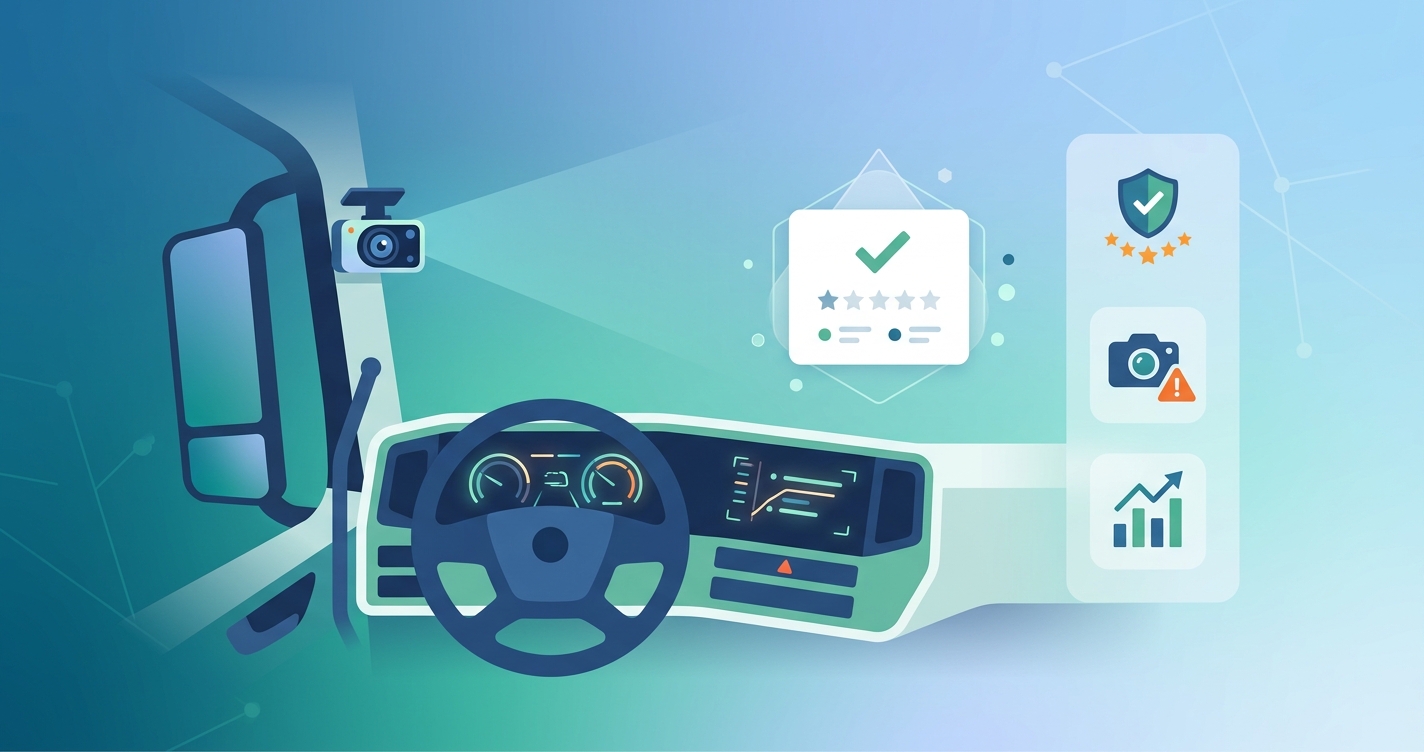
When a fleet safety director evaluate DMS vendors process starts, the hardest part is usually not finding suppliers. It is separating flashy dashboards from systems that can actually lower risk in real operations. A driver monitoring system can look impressive in a demo and still fail where it matters: false alerts on night routes, weak event review tools, poor telematics integration, or no clear path from detection to coaching. That is why serious fleet buyers now treat DMS selection as a safety-program design decision, not just a camera purchase.
Brian Tefft of the AAA Foundation for Traffic Safety reported in 2018 that drivers who slept for less than four hours in the previous 24 hours had crash involvement rates 11.5 times higher than drivers who slept seven or more hours.
How fleet safety directors should evaluate DMS vendors
A strong DMS evaluation starts with a simple question: what problem is the fleet trying to solve first?
For some programs, the answer is fatigue on long-haul routes. For others, it is distraction in urban delivery, insurance pressure after severe claims, or preparation for stricter OEM and regulatory expectations around driver-state monitoring. If the buyer cannot rank those priorities, every vendor will sound equally capable.
The best evaluations usually score vendors across six categories:
- detection quality in real operating conditions
- alert design and false-alert management
- workflow fit for coaching and safety review
- hardware and installation complexity
- data governance and privacy controls
- long-term total cost of ownership
That sounds obvious, but I keep seeing fleets overweight the demo and underweight the operating model. The software matters. The review queue matters more.
| Evaluation area | What fleet teams should ask | Why it matters in operations |
|---|---|---|
| Detection quality | Can the system distinguish distraction, drowsiness, occlusion, and non-events across day, night, eyewear, and vibration conditions? | Weak detection logic creates mistrust and bloated review queues |
| Alert performance | How often do false alerts occur, and how are sensitivity thresholds tuned by vehicle type or route? | Too many nuisance alerts train drivers to ignore the system |
| Coaching workflow | Does the platform make it easy to review events, grade severity, and connect incidents to intervention? | Detection without follow-through rarely changes behavior |
| Integration | Can it connect with telematics, video, ELD, and dispatch systems already in use? | Safety teams need one operating picture, not another silo |
| Governance | Where is driver data stored, how long is it retained, and what access controls exist? | In-cabin video and biometric-adjacent data raise labor and privacy concerns |
| Economics | What are the real costs for hardware, installation, subscriptions, support, and expansion? | Low entry pricing can hide expensive fleet-scale rollout costs |
Why detection quality is the first thing to verify
Detection quality is not just a model-performance issue. It is the foundation of trust.
The FMCSA-sponsored 2009 naturalistic study by Rebecca Olson, Richard Hanowski, Jeffrey Hickman, and Jonathan Bocanegra found that commercial drivers were engaged in non-driving tasks in 71% of crashes and 46% of near-crashes. More important for procurement, the study showed that tasks pulling visual attention away from the forward roadway carried especially high risk. That gives fleets a concrete reason to test whether a DMS can identify meaningful attention loss instead of flooding the dashboard with low-value events.
A vendor demo should not be the only proof point. Safety directors should ask for evidence from environments that resemble their own fleet:
- highway versus urban route mixes
- day and night performance
- drivers with sunglasses, prescription lenses, or hats
- vibration-heavy cabins such as vans, trucks, or heavy equipment
- edge cases like partial face occlusion or rapid head movement
If a vendor cannot explain where the system struggles, I would worry. Real monitoring programs always have edge cases.
Alert quality matters almost as much as detection quality
A DMS can be technically sophisticated and still be operationally annoying.
This is where many fleets get burned. A system that alerts too early, too often, or too vaguely may create compliance theater instead of safer driving. Drivers learn the system's habits fast. If they conclude that warnings are mostly noise, the safety value drops even when the computer vision model looks strong on paper.
That is one reason Euro NCAP's 2026 protocol changes are worth watching even for fleet buyers outside passenger-car ratings. The new protocols put more weight on direct monitoring of drowsiness, distraction, and impairment, and they reward systems that can identify driver state reliably enough to support escalation and intervention. In plain English: the market is moving away from superficial attention checks and toward higher-confidence driver-state assessment.
During evaluation, fleets should ask vendors to show:
- how alert thresholds are configured
- whether settings can vary by use case or vehicle class
- how unacknowledged alerts are logged
- what escalation path exists for repeated high-severity events
- how the system handles an unresponsive driver scenario
A good DMS should help drivers recover attention. It should not just create a louder cab.
Industry applications that change the vendor scorecard
Long-haul freight fleets
Long-haul operations should push hardest on fatigue sensitivity, night performance, alert fatigue, and route-level analytics. Tefft's AAA Foundation work makes the safety case obvious: sleep loss is not a vague wellness issue. It is a measurable crash-risk multiplier.
Last-mile and urban delivery
These fleets need stronger distraction detection, event triage, and coaching workflows. NHTSA's 2025 research note on distracted driving in 2023 reported 3,275 fatalities in distraction-affected crashes, with an estimated 324,819 people injured. Urban fleets live inside that problem set.
Transit, passenger, and service fleets
These programs often care more about defensibility: what happened, when, how the driver responded, and whether supervisors can act quickly. In those settings, reporting clarity may matter as much as raw model sophistication.
OEM-adjacent or advanced safety programs
Fleets partnering with OEMs or Tier-1 suppliers should ask tougher questions about camera architecture, future software updates, edge processing, and whether the vendor can support expansion into broader in-cabin sensing such as contactless vitals or driver-state fusion.
Current research and evidence
The evidence base behind DMS procurement comes from regulation, crash research, and human-factors work rather than from vendor marketing.
Olson, Hanowski, Hickman, and Bocanegra's FMCSA study remains one of the clearest reasons to prioritize forward-attention detection, because it ties visual distraction to safety-critical events in commercial operations. Tefft's AAA Foundation analysis adds the fatigue side of the equation by quantifying how quickly crash risk rises as sleep duration falls.
Policy is moving in the same direction. Euro NCAP's 2026 protocol updates raise expectations for direct driver monitoring and clearer detection of drowsiness, distraction, and impairment. Even when a fleet is not buying for consumer-vehicle ratings, those standards influence product roadmaps and buyer expectations.
NHTSA's distracted-driving note adds the broader operating context. The issue is not rare. It is a persistent national risk category, which means fleets need systems that can sort signal from noise.
Evidence that should shape a DMS vendor scorecard
| Source | Institution | Procurement takeaway |
|---|---|---|
| Brian Tefft (2018), Acute Sleep Deprivation and Risk of Motor Vehicle Crash Involvement | AAA Foundation for Traffic Safety | Fatigue detection should be treated as a core safety function, not a nice-to-have |
| Olson, Hanowski, Hickman, and Bocanegra (2009), Driver Distraction in Commercial Vehicle Operations | FMCSA / Virginia Tech Transportation Institute | Vendor scoring should prioritize attention-loss detection that maps to real crash risk |
| Research Note: Distracted Driving in 2023 (2025) | NHTSA | Fleets should evaluate DMS around distraction burden, not just compliance features |
| Euro NCAP 2026 Safety Assist protocols | Euro NCAP | The market is shifting toward stronger direct monitoring, escalation logic, and reliable state detection |
The future of DMS vendor evaluation
Over the next few years, I think the buying process gets stricter in two ways.
First, fleets will ask for more proof from operational pilots rather than slide decks. They will want route-specific data, false-alert rates, driver acceptance feedback, and evidence that coaching outcomes improve after deployment.
Second, vendor evaluations will broaden beyond distraction and drowsiness alone. The next layer is richer in-cabin state awareness: stress signals, occupant context, and contactless physiological monitoring where programs justify it. Not every fleet needs that now. But the platforms being selected in 2026 and 2027 should at least have a believable path toward it.
That is really the point of a good procurement process. It should not just pick a vendor that meets today's checkbox list. It should identify a platform that still makes sense when the fleet wants better analytics, tighter integration, and more capable in-cabin monitoring later on.
Frequently Asked Questions
What should a fleet safety director look for first when evaluating DMS vendors?
Start with detection quality in real fleet conditions. If the system cannot perform reliably across route types, lighting conditions, and driver behaviors, the rest of the platform matters much less.
How important are false alerts in DMS vendor selection?
Very important. High false-alert rates reduce driver trust, increase review workload, and can undermine coaching programs. A DMS should improve attention, not become background noise.
Should fleets evaluate DMS vendors only on compliance requirements?
No. Compliance matters, but fleets should also evaluate workflow fit, integration, support, privacy controls, and whether the platform can scale across the operation.
Why do coaching tools matter in a driver monitoring platform?
Because detections alone do not change safety outcomes. Fleets need event review, severity grading, supervisor workflows, and repeat-exposure tracking to turn alerts into action.
For fleets and automotive teams looking beyond basic attention alerts, solutions like Circadify are being developed for programs that connect driver monitoring with in-cabin vital-sign and state-awareness capabilities. For more on that direction, see Circadify's automotive cabin page, plus related Quick Scan Vitals coverage on driver health analytics and actionable alerts and driver monitoring KPIs every fleet safety manager should track.