Driver Fatigue Detection Camera: 7 Features That Matter
A buyer's guide to driver fatigue detection camera hardware: the 7 capabilities that separate production-grade in-cabin systems from weak ones.
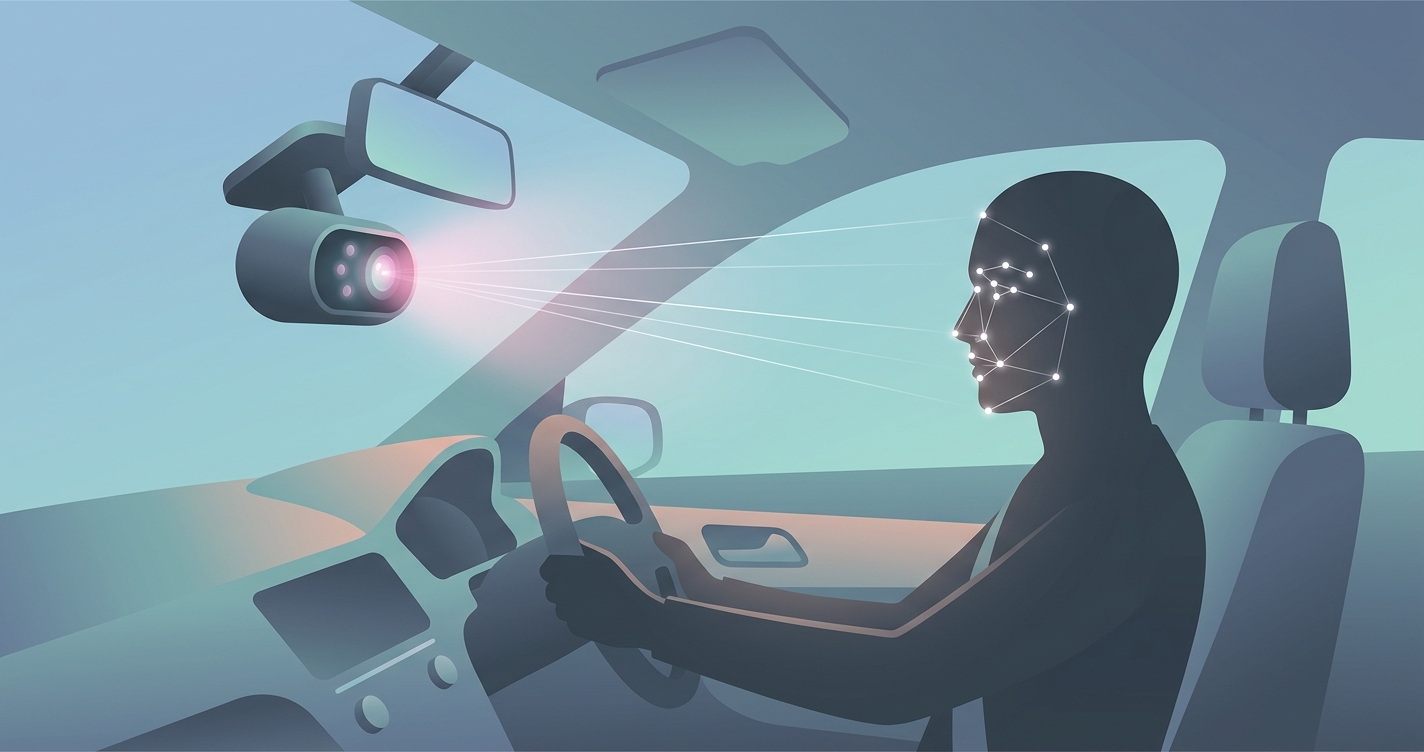
When a Tier-1 supplier or OEM evaluates a driver fatigue detection camera, the spec sheet rarely tells the full story. Two modules can claim identical resolution and frame rate, yet one holds detection accuracy through a tunnel at dusk while the other drops the driver's eyes the moment sunlight rakes across the cabin. The difference lives in a handful of capabilities that decide whether a system survives real-world duty cycles or fails the cases that matter most. Buyers comparing in-cabin fatigue camera hardware in 2025 are no longer choosing between "has a camera" and "has none." They are choosing between systems that detect drowsiness at the edge in milliseconds and systems that look good in a showroom demo and stumble on the road.
Drowsy driving was a factor in roughly 17.6 percent of all fatal U.S. crashes between 2017 and 2021, an estimated 29,834 deaths, according to the AAA Foundation for Traffic Safety (2023) analysis of NHTSA data.
That gap between reported and actual fatigue crashes is exactly why hardware selection carries weight. A driver fatigue detection camera is the first sensing layer in a safety chain, and weak hardware quietly caps the accuracy of everything downstream. Below are the seven driver drowsiness camera features that consistently separate production-grade systems from the rest.
What makes a driver fatigue detection camera production-grade
A capable driver fatigue detection camera does more than record the cabin. It has to extract reliable signals from a moving, vibrating, light-chaotic environment where the driver wears sunglasses, turns their head, and is partly lit by a low winter sun. The features below map directly to the failure modes that fleet operators and homologation teams encounter, and to the Euro NCAP direct-monitoring expectations now shaping procurement.
Here is how the seven priority capabilities compare against what a weaker system typically offers.
| Feature | Production-Grade System | Weak System | Why It Matters |
|---|---|---|---|
| NIR illumination (940 nm) | Active NIR with bandpass filter, works in full darkness | Visible-light only, fails at night | Fatigue happens disproportionately at night |
| Global shutter sensor | Distortion-free capture during vibration and motion | Rolling shutter, smears fast eye motion | PERCLOS and blink rate depend on clean frames |
| Sunglass and glare penetration | Sees through most tinted lenses | Loses eye state with eyewear | A large share of drivers wear sunglasses |
| Edge processing latency | Sub-100 ms on-device inference | Cloud round-trip, seconds of delay | Microsleeps last 1 to 30 seconds |
| Multi-signal fusion | PERCLOS, head pose, yawning, plus rPPG vitals | Eye closure only | Single-signal triggers false alarm |
| Wide field of view and re-acquisition | Holds face through head turns and occlusion | Drops driver, slow to re-lock | Real driving is not a static portrait |
| Automotive-grade durability | Wide temp range, vibration and EMC rated | Consumer-grade, degrades fast | Cabins reach extreme temperatures |
1. near-infrared illumination that works in the dark
Fatigue is a night problem first. A driver fatigue detection camera that relies on visible light is effectively blind during the hours when drowsy crashes peak. The reference design across modern in-cabin fatigue camera systems uses active near-infrared illumination, typically at 940 nm, paired with a matching bandpass filter on the sensor. This wavelength is invisible to the driver, so it does not distract, and it delivers consistent illumination of the eye region regardless of ambient lighting. NIR also penetrates many tinted lenses, which is why it appears in nearly every serious fatigue monitoring camera spec.
2. global shutter for motion without smear
Vehicle cabins vibrate, and drivers move. A rolling-shutter sensor reads the frame line by line, so fast eye motion or a road bump can smear the exact pixels a drowsiness algorithm needs. A global shutter captures the entire frame at one instant, preserving the crisp eyelid boundaries that PERCLOS (percentage of eyelid closure) and blink-duration metrics depend on. For any system computing fatigue from eye geometry, global shutter is closer to a requirement than a luxury.
3. eyewear and glare robustness
Drivers wear glasses, sunglasses, and sit in cabins crossed by harsh, shifting light. A weak driver drowsiness camera loses eye state the moment a lens tints or a reflection lands on the frame. Strong systems combine NIR penetration, anti-reflective optical design, and algorithms trained on heavy eyewear and glare conditions. Buyers should ask for detection rates specifically under sunglasses and direct low-angle sun, not just clean lab conditions.
4. edge processing and low latency
A microsleep can last from one to thirty seconds, which means a fatigue alert delivered seconds late is no alert at all. Production systems run inference on-device at the edge, targeting sub-100 millisecond response from frame capture to detection. Cloud-dependent architectures introduce round-trip delays and connectivity risk that are unacceptable for a safety-critical trigger. Edge processing also keeps biometric data in the cabin, which simplifies the privacy posture that OEM legal teams now scrutinize.
5. multi-signal fusion beyond eye closure
Eye closure alone produces false positives. A driver glancing at a mirror or squinting in sun is not asleep. The strongest in-cabin fatigue camera platforms fuse several independent signals: PERCLOS, blink dynamics, head pose and nodding, yawning, and increasingly camera-based vital signs through remote photoplethysmography (rPPG). Research teams including those behind the SparsePPG work presented at CVPR (2024) have shown that near-infrared cameras can estimate heart rate from the driver's face, adding a physiological channel that eye tracking alone cannot provide. Fusion both raises true-positive rates and suppresses nuisance alarms that erode driver trust.
6. Field of View and Fast Re-Acquisition
Drivers check blind spots, talk to passengers, and reach for controls. A camera with too narrow a field of view, or slow face re-acquisition, drops the driver during exactly these moments and reports a gap instead of a state. Production-grade modules hold a wide enough field of view to keep the face and eyes in frame through normal head movement and re-lock quickly after occlusion. This is one of the quieter driver drowsiness camera features, but it strongly shapes real-world uptime.
7. automotive-grade durability
A cabin module endures temperature swings, sustained vibration, and electromagnetic noise across a vehicle lifetime measured in years. Consumer-grade optics and sensors degrade in this environment. Genuine fatigue monitoring camera specs include wide operating temperature ranges, vibration tolerance, and EMC compliance. For homologation and warranty exposure, this is non-negotiable.
Industry Applications
Oem five-star safety programs
Euro NCAP has moved direct driver monitoring from optional to expected. Under the protocols shaping 2026 assessments, indirect methods such as steering-based estimation are no longer sufficient, and drowsiness must be recognized at speeds of 50 km/h and above using a metric equivalent to a Karolinska Sleepiness Scale level of seven or higher. A driver fatigue detection camera that lacks NIR night performance or fast edge response simply cannot meet these bars, which puts hardware selection on the critical path to a five-star rating.
Commercial and mixed fleets
Fleet operators care about duty cycle, false-alarm rates, and integration with telematics. A camera that nuisance-triggers will be unplugged by drivers within a week, so multi-signal fusion and eyewear robustness translate directly into adoption. Fleets running mixed vehicle types also value modules that hold accuracy across varied cabin geometries and mounting positions.
Current research and evidence
The research base behind these features is maturing quickly. The AAA Foundation for Traffic Safety (2023) estimate that nearly 18 percent of fatal crashes involve drowsiness underlines why detection sensitivity matters. On the hardware side, work such as the SparsePPG near-infrared vital-signs study (2024) and the PhysDrive multimodal in-vehicle dataset (2025) on arXiv are expanding what a single camera can sense, pushing from eye state alone toward fused physiological monitoring. A 2024 MDPI study on a near-infrared time-of-flight contactless vital sign monitoring system demonstrated heart rate and respiration estimation under cabin illumination and motion challenges, reinforcing that NIR is the practical foundation for in-cabin sensing. Across this literature, the recurring theme is that motion robustness, NIR illumination, and signal fusion are what move a system from lab accuracy to road accuracy.
The future of driver fatigue detection cameras
The trajectory is toward fewer cameras doing more work. The same NIR global-shutter sensor that computes PERCLOS today is increasingly expected to estimate heart rate, respiration, and stress through rPPG, turning a single fatigue module into a broader in-cabin health node. Regulatory pressure will keep raising the floor on direct monitoring, while OEMs consolidate distraction, drowsiness, impairment, and occupant sensing onto shared hardware. The buyers who win will be those who select cameras designed for fusion and edge inference now, rather than retrofitting fatigue-only modules later.
Frequently asked questions
What is the most important feature in a driver fatigue detection camera? No single feature wins alone, but near-infrared illumination is foundational because fatigue concentrates at night. Without reliable NIR performance, every downstream metric degrades in the conditions that matter most.
Why does global shutter matter for fatigue detection? Cabins vibrate and eyes move fast. A global shutter captures each frame at one instant, preserving the sharp eyelid boundaries that PERCLOS and blink-duration algorithms rely on, whereas rolling shutter can smear those exact pixels.
Can one camera measure both fatigue and vital signs? Yes. Research on near-infrared remote photoplethysmography shows a single in-cabin camera can estimate heart rate and respiration alongside eye and head metrics, enabling multi-signal fusion from one module.
Does Euro NCAP require a fatigue detection camera? Euro NCAP now expects direct, camera-based driver monitoring, and indirect steering-based methods no longer satisfy the highest ratings. Drowsiness detection at highway speeds is part of the assessment shaping 2026 protocols.
Circadify is building camera-based driver fatigue, drowsiness, and stress detection designed around these seven capabilities, with edge inference and rPPG vital-sign fusion in one in-cabin module. Tier-1 suppliers and OEMs evaluating their next driver monitoring program can start a conversation through the automotive cabin program inquiry.