Could my car catch a blood sugar crash before I pass out driving?
Exploring how in-cabin health monitoring can detect physiological signs of hypoglycemia in diabetic drivers before cognitive impairment, preventing potential accidents.
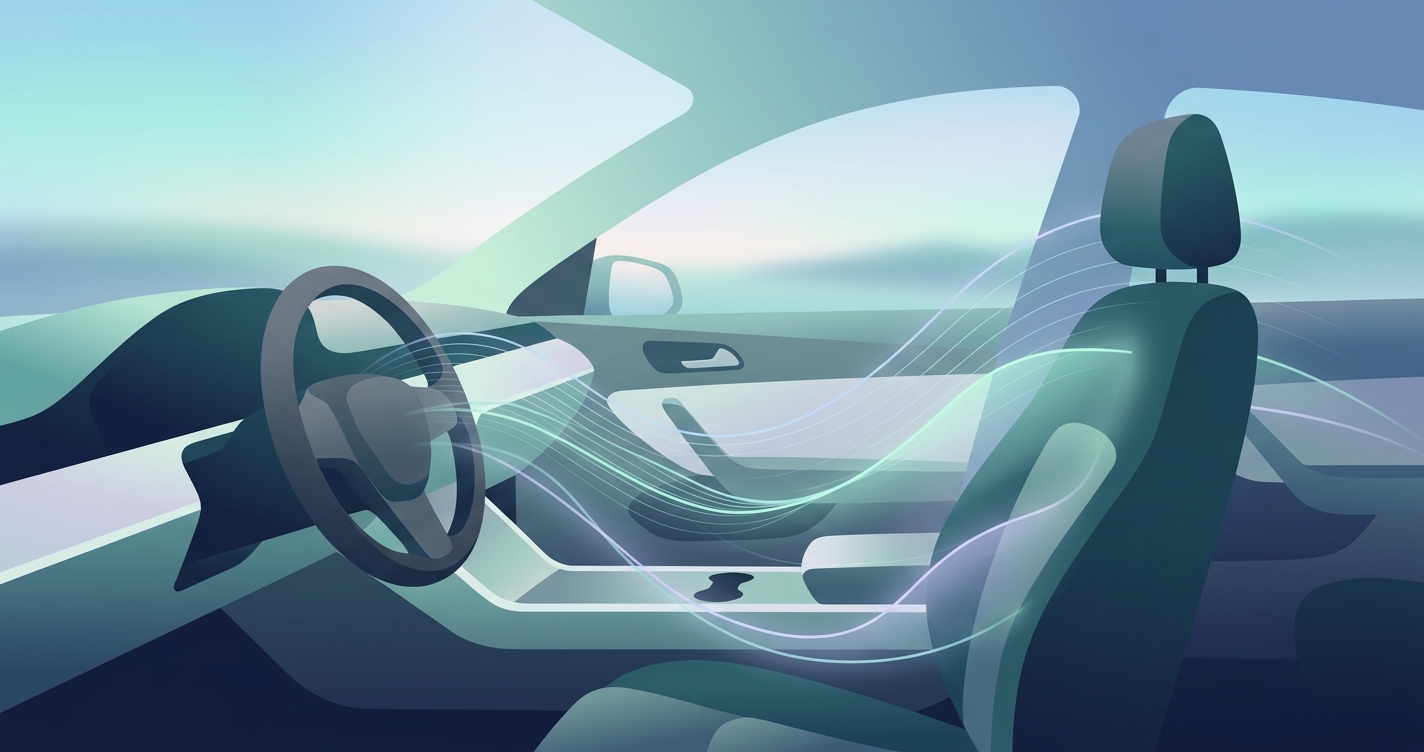
For the millions of drivers with diabetes, the fear of a sudden hypoglycemic event behind the wheel is a persistent and serious concern. A rapid drop in blood sugar can impair judgment, slow reaction times, and in severe cases, lead to a complete loss of consciousness, turning a routine commute into a life-threatening scenario. While drivers are diligent, the insidious nature of a "sugar crash" is that its most dangerous effects often precede the driver's own awareness of the problem. This gap between physiological onset and cognitive recognition is precisely the window where advanced in-cabin monitoring systems are poised to become a critical safety layer, detecting the subtle biological precursors of an emergency before the driver even knows they are in trouble.
According to research analyzed by the American Diabetes Association (ADA) and the National Highway Traffic Safety Administration (NHTSA), drivers with a history of severe hypoglycemic episodes have a two to seven times higher risk of being involved in a motor vehicle crash.
The pre-crash window: detecting hypoglycemia before impairment
The human body's response to falling blood glucose is not instantaneous confusion or fainting. It begins with a cascade of autonomic nervous system responses, often called neurogenic or autonomic symptoms. The body releases counter-regulatory hormones to fight the dropping sugar levels, triggering a range of physiological signals. These signals are the "early warning system" and include elevated heart rate, increased heart rate variability (HRV), trembling, and changes in skin perfusion due to sweating. Critically, these autonomic symptoms manifest before the more dangerous neuroglycopenic symptoms, such as confusion, dizziness, and blurred vision, which indicate the brain is being starved of glucose. It is this pre-symptomatic window that makes advanced diabetic driver health monitoring a viable concept. By using sophisticated optical sensors, a vehicle can track these physiological markers in real-time, identifying a developing hypoglycemic event often minutes before the driver can no longer control the vehicle safely.
| Monitoring Method | Technology | Invasiveness | Real-Time Capability | Vehicle Integration |
|---|---|---|---|---|
| Finger-Prick Test | Photometric | High (Requires blood sample) | Intermittent (Manual spot checks) | None (User-dependent) |
| Wearable CGM | Electrochemical Sensor | Medium (Sub-dermal sensor) | Continuous (Data every 5-15 mins) | Partial (Via Bluetooth/App) |
| Camera Monitoring | Remote PPG (rPPG) | None (Contactless) | Continuous (Real-time analysis) | Seamless (Embedded in cabin) |
- Neurogenic (autonomic) symptoms like sweating and a racing heart often precede cognitive impairment.
- Neuroglycopenic symptoms, such as confusion and dizziness, follow as the brain is deprived of glucose.
- Hypoglycemia is typically defined as a blood glucose level below 70 mg/dL.
- The goal of in-cabin monitoring is not to provide a medical diagnosis but to detect a state of driver impairment.
Industry Applications
The ability to detect driver impairment from glycemic changes has significant implications across the automotive landscape, from consumer vehicles to commercial fleets.
Adas and safety system integration
For automotive OEMs, integrating hypoglycemia detection into an Advanced Driver-Assistance System (ADAS) suite is a natural evolution of driver monitoring. When a potential hypoglycemic event is detected via camera, the vehicle's safety system could:
- Issue escalating auditory and visual alerts.
- Suggest that the driver pull over.
- In semi-autonomous vehicles, the car could increase following distance or prepare to execute a safe-stop maneuver if the driver becomes unresponsive.
Fleet management and commercial vehicles
For fleet operators, especially in long-haul trucking or public transport, monitoring for diabetic driver health is a key part of risk management. Integrating this capability into a fleet driver health monitoring program can:
- Provide dispatchers or fleet managers with an alert indicating a driver may need to take a break.
- Reduce the risk of high-consequence accidents involving commercial vehicles.
- Offer an objective data point for driver wellness programs, enhancing overall fleet safety and reducing liability.
Current research and evidence
The concept of using cameras for non-invasive health monitoring is grounded in the science of remote photoplethysmography (rPPG). rPPG technology uses a standard digital camera to detect subtle, imperceptible changes in light reflection from the skin. These changes correspond to the volumetric fluctuations of blood in microvascular tissue. From this signal, it is possible to calculate heart rate, heart rate variability, and even respiration rate.
Recent academic and industry research has focused on extending this capability to glucose monitoring. A 2023 review published in the journal Sensors (MDPI) explored various studies on non-contact blood glucose monitoring, highlighting the potential of rPPG to correlate physiological parameters with glucose levels. Researchers noted that machine learning algorithms are being developed to identify the complex patterns in rPPG signals that correspond to a hypoglycemic state. Further research presented at SPIE has demonstrated the feasibility of using camera-based photoplethysmography and machine learning for non-invasive glucose monitoring, though it remains a field in active development. These studies do not aim to replace medical-grade CGMs but to use rPPG-derived trends to infer a state of physiological distress consistent with hypoglycemia.
The future of diabetic driver health monitoring
The trajectory of in-cabin health monitoring is moving from passive observation to active, predictive safety intervention. For diabetic drivers, this means the car is no longer just a mode of transport but a co-pilot in maintaining well-being on the road. The future lies in multi-modal sensing, where data from a camera monitoring vital signs is fused with data from other sensors assessing driving behavior (e.g., lane weaving, erratic speed). This fusion will create a highly reliable picture of driver state, enabling the vehicle to differentiate between distraction, drowsiness, and a medical emergency like a blood sugar crash with much greater accuracy. As on-device processing becomes more powerful, these complex analyses can happen instantaneously within the vehicle, ensuring driver privacy and immediate response capability.
Frequently asked questions
Q: How accurate is camera-based monitoring for blood sugar? A: Current technology is not designed to provide a medical-grade blood glucose reading in mg/dL. Instead, it detects the secondary physiological effects of hypoglycemia, such as an elevated heart rate and changes in skin perfusion. Its function is to identify a state of impairment, not to make a clinical diagnosis.
Q: Does this mean the car is constantly storing my health data? A: Not necessarily. Most advanced driver monitoring systems are designed with privacy as a primary concern. Processing typically happens on-device (edge computing), meaning the raw video and vital signs data are analyzed in real-time within the car and then discarded. The system only outputs an event trigger, such as "impairment detected," without storing personal health information.
Q: Is this technology available in cars today? A: Driver monitoring systems (DMS) are becoming standard in new vehicles, primarily for detecting drowsiness and distraction. The application of these systems for specific medical events like hypoglycemia is an advanced feature currently in development by specialized technology firms and automotive R&D programs. It represents the next generation of in-cabin safety.
As the line between automotive technology and personal wellness blurs, the demand for more sophisticated, life-saving features will only grow. Circadify is at the forefront of this shift, developing the advanced sensing and AI capabilities that will power the next generation of in-cabin safety. Our work in camera-based vital signs monitoring is addressing the core challenges of detecting driver impairment, including from dangerous medical events like hypoglycemia. To learn more about incorporating this life-saving technology into your next vehicle platform or fleet safety program, please visit our automotive program at circadify.com/custom-builds/automotive-cabin.