
Can my car sense if my heart rate is off during my morning commute?
Discover how in-cabin heart rate monitoring uses camera, ECG, and radar to detect cardiac anomalies during daily drives, enhancing vehicle safety for OEMs and Tier-1 suppliers.
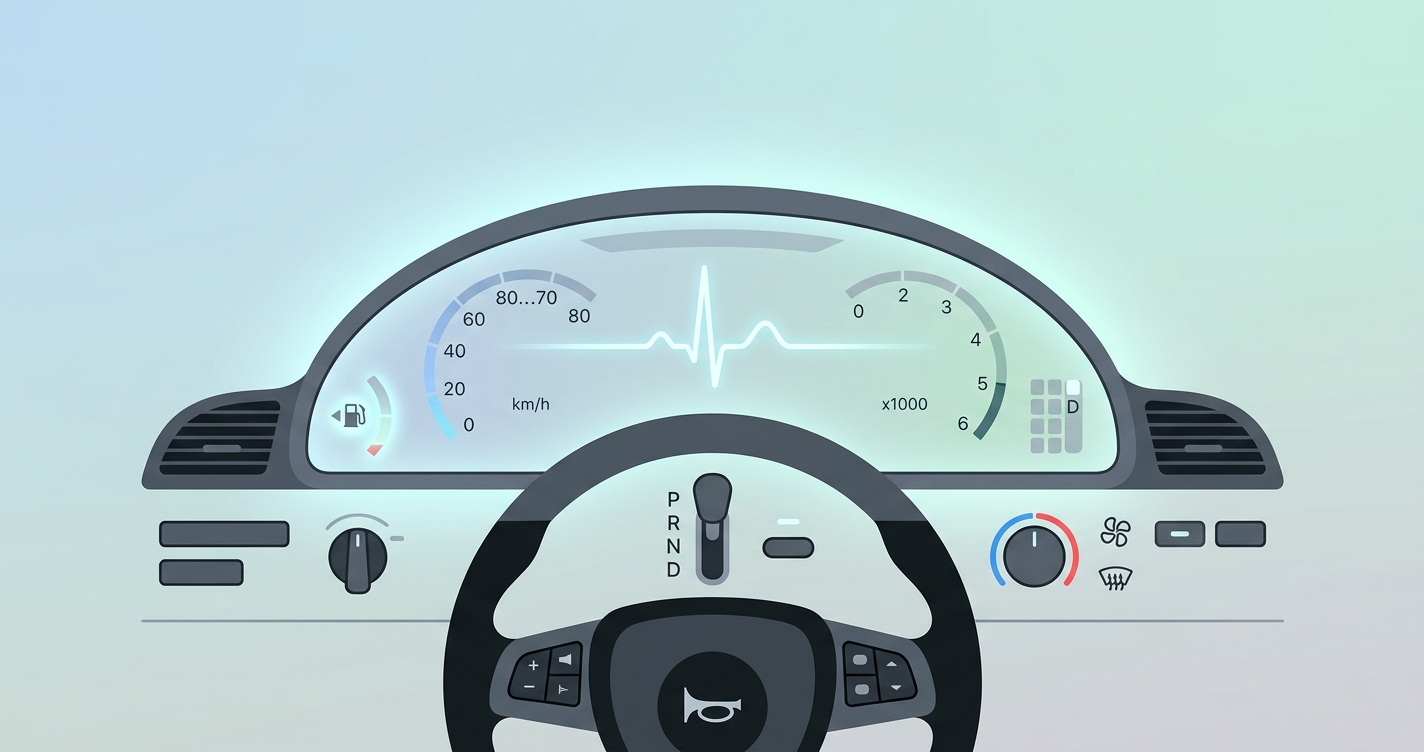
The morning commute is a data-rich environment, yet for decades, the car has been blind to the most critical variable inside it: the driver's physiological state. While we track engine performance and fuel efficiency with granular detail, the driver's own readiness is left to self-assessment. This is changing rapidly. The integration of advanced biosensors is turning the vehicle into a proactive guardian of driver health, and a core component of this evolution is in-cabin heart rate monitoring. This technology is designed to continuously and unobtrusively track cardiac function, creating the potential to detect dangerous anomalies long before they become critical events.
"Sudden cardiac death while driving is a significant, documented cause of traffic accidents, with a majority of events occurring in males aged 40-60 who often have a history of hypertension."
- Kenji Kawasuso et al., Journal of Clinical Medicine (2021)
How cars will monitor heart health
At its core, in-cabin heart rate monitoring is a non-invasive method for tracking the driver's cardiac rhythm and variability. Unlike clinical or wearable devices, the goal is seamless integration into the vehicle cabin, requiring no action from the driver. The system works by using different types of sensors to detect the subtle physiological signals that indicate heart activity. This data is then processed by algorithms designed to filter out the "noise" of a moving vehicle, vibrations, motion, and changing light, to isolate a clear and consistent heart rate. The technology is rapidly moving from the lab to production-ready solutions for automotive OEMs and Tier-1 suppliers.
| Technology | How It Works | Advantages | Disadvantages |
|---|---|---|---|
| Camera-Based (rPPG) | A standard or infrared camera captures minute changes in skin color on the driver's face, caused by the pulsing of blood through capillaries. This is known as remote photoplethysmography (rPPG). | Contactless and seamless; can be integrated into existing Driver Monitoring System (DMS) cameras. | Highly sensitive to motion artifacts (head turning, talking) and changes in ambient lighting. |
| Sensor-Based (ECG) | Micro-sensors embedded in the steering wheel or seat fabric detect the heart's electrical signals (electrocardiogram or ECG) through the driver's hands or back. | Provides a high-fidelity signal comparable to clinical ECGs; less susceptible to lighting changes. | Requires physical contact, which may be inconsistent; performance can vary based on clothing and grip. |
| Radar-Based (mmWave) | Millimeter-wave radar sensors emit low-power radio waves that detect the subtle chest movements caused by breathing and heartbeats. | Contactless and can work through clothing and in complete darkness; not affected by skin tone or lighting. | Can be confused by multiple occupants or significant body movement; requires careful cabin placement. |
These systems are being designed to recognize specific patterns that could signal a problem, such as:
- Atrial fibrillation (AFib) or other arrhythmias
- Extreme tachycardia (abnormally fast heart rate)
- Bradycardia (abnormally slow heart rate)
- High heart rate variability, which can correlate with stress
Industry Applications
For automotive manufacturers and suppliers, the application of in-cabin heart rate monitoring extends beyond simple health tracking. It represents a new layer of safety and occupant experience.
Real-time emergency alerts
The most critical application is the detection of sudden cardiac events. By identifying a rapid, dangerous change in heart rhythm, or a complete lack of a signal, a vehicle could be programmed to trigger a safe stop protocol. This could involve slowing the vehicle, activating hazard lights, and automatically contacting emergency services through its telematics system, providing a location and context for the incident.
Stress and fatigue correlation
Heart rate and heart rate variability (HRV) are strong indicators of stress and cognitive load. By monitoring these metrics during a drive, the vehicle can build a baseline for the driver. When sustained high stress is detected, the cabin environment could adapt by suggesting a break, changing the ambient lighting, or adjusting the audio volume. This data provides a much deeper insight into driver state than camera-only drowsiness detection.
Long-term health pattern analysis
Over time, the vehicle can aggregate anonymized data to identify long-term trends in a driver's cardiac health. This information, if the driver opts in, could be shared through a companion app to provide wellness insights, encouraging preventative care. For fleet operators, this same data can help identify systemic issues like high-stress routes or drivers who may be at higher risk for health-related incidents.
Current research and evidence
The primary challenge for in-cabin heart rate monitoring is signal integrity. The automotive cabin is a noisy environment, and separating the subtle heartbeat signal from motion artifacts is a complex engineering problem. A significant body of research is focused on solving this.
Researchers have extensively explored using advanced algorithms to overcome these challenges. A 2024 systematic review by Jingda Du et al. analyzed numerous AI-driven rPPG systems, highlighting the use of deep learning models to improve signal extraction in dynamic, real-world driving scenarios. Work published in IEEE journals has demonstrated how techniques like adaptive noise cancellation and variational mode decomposition can effectively filter out artifacts caused by driver movement and road vibrations (Zhang, Z. et al., 2022). These studies confirm that while challenges remain, robust, real-time heart rate measurement in moving vehicles is achievable. The consensus is that multi-modal approaches, fusing data from a camera with another source like radar or ECG sensors, offer the most promising path to commercial-grade accuracy.
The future of in-cabin heart rate monitoring
The trajectory for this technology is toward deeper integration and data fusion. Future systems will not operate in isolation. Instead, heart rate data will be a critical input for a centralized driver state engine. It will be fused with inputs from eye-tracking cameras (for drowsiness), GSR sensors (for stress), and the vehicle's own ADAS. For example, if the system detects a high heart rate combined with erratic steering and lane departure warnings, the vehicle's intervention can be much more confident and decisive. This holistic approach will transform the car from a passive mode of transport into an intelligent co-pilot, fully aware of the driver's capacity to operate the vehicle safely.
Frequently asked questions
How accurate is in-cabin heart rate monitoring? Accuracy depends on the technology and conditions. ECG-based sensors in steering wheels or seats can achieve near-clinical accuracy. Camera-based rPPG systems are becoming highly accurate due to advanced AI-powered algorithms that filter out motion and light interference, though they are still more sensitive to environmental factors.
Is this technology available in cars today? While not yet a mainstream feature, several automotive OEMs and Tier-1 suppliers have showcased concept systems and are actively developing the technology. It is expected to appear in premium vehicle models within the next few years as part of comprehensive driver monitoring and wellness packages.
What's the difference between camera (rPPG) and sensor (ECG) monitoring? The main difference is contact. Camera-based rPPG is completely contactless, using a camera to see blood flow pulses in the face. ECG sensors require physical contact with the driver's hands or back to read the heart's electrical signals directly. ECG is typically more precise, while rPPG is easier to integrate invisibly.
The development of robust driver health monitoring systems is a key focus for the automotive industry's push toward enhanced safety and autonomy. Circadify is at the forefront of developing camera-based solutions that address these complex challenges. If your organization is exploring the future of in-cabin sensing, learn more about our programs for automotive custom builds at circadify.com/custom-builds/automotive-cabin.