How a Camera Reads Driver Vital Signs Without Touching Them
A beginner-friendly explainer on how a dashboard camera measures driver heart rate and breathing without contact using rPPG and in-cabin sensing.
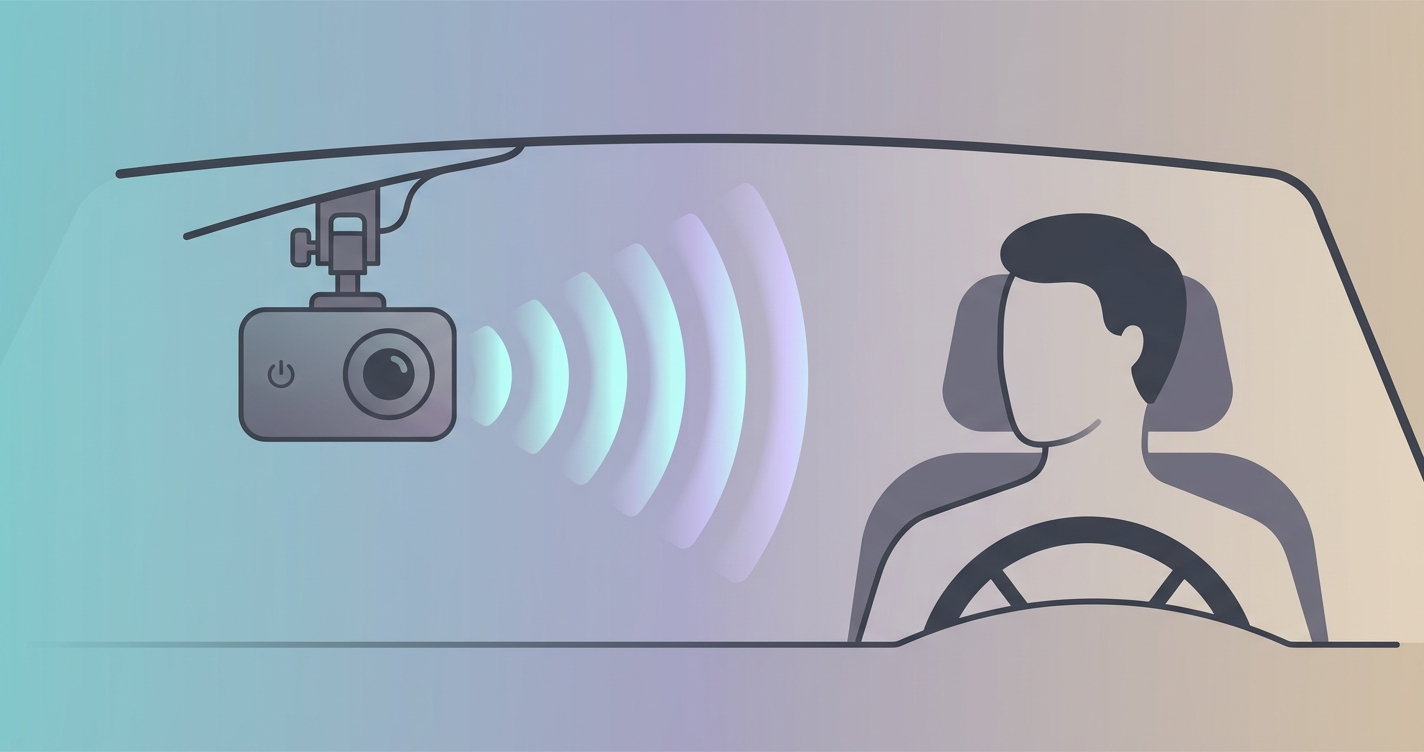
A modern dashboard camera was added to most new vehicles to watch where a driver looks and whether their eyelids are drooping. Quietly, that same lens is learning to do something far more intimate: read the body. A driver monitoring system vitals capability means the camera can estimate heart rate and breathing rate from nothing more than light reflected off a person's face, with no wires, no cuff, and no wearable. For automotive OEMs, Tier-1 suppliers, and fleet operators trying to understand what is real versus marketing, the underlying method is surprisingly grounded in physics that has been studied for more than a decade.
"Accuracy of remote photoplethysmography can drop sharply at elevated heart rates, which makes robust signal processing the deciding factor for real-world use." - Bhargav Acharya and colleagues, Bielefeld University (2023)
How a driver monitoring system vitals camera actually works
The core technique is called remote photoplethysmography, usually shortened to rPPG. Every time the heart beats, it pushes a pulse of blood through the tiny vessels just under the skin of the face. That extra blood very slightly changes how much light the skin absorbs and reflects. The change is far too small for a human eye to notice, but a camera sees it as a faint rhythmic shift in the color of skin pixels, mostly in the green channel where blood absorbs light most strongly.
The software watches a patch of skin, usually the forehead and cheeks, frame by frame. It averages the color values across that region, filters out noise, and looks for the repeating pattern that matches a pulse. The frequency of that pattern is the heart rate. A second, slower signal hides in the same video: the rise and fall of the chest and shoulders, plus subtle color and motion changes tied to each breath, which the system turns into a respiration rate.
This is why the feature is sometimes described as contactless vital signs car technology. Nothing touches the driver. The same hardware that already exists for gaze and drowsiness tracking is reused, and the vital signs come from analyzing the video stream rather than adding new sensors.
A few practical points make heart rate from camera driving harder than it sounds:
- The cabin is a moving, vibrating environment, so the camera has to separate a real pulse from engine vibration and road bumps.
- Lighting swings wildly. A driver passes through tunnels, tree shadows, and direct sun within seconds.
- Skin tone, facial hair, and glasses all change how much usable signal the camera receives.
- The driver is rarely still, so head motion has to be tracked and compensated for.
Comparing the main ways to sense driver vitals
Camera-based sensing is one of several approaches an automotive team can choose. The table below compares the most common options on the factors that matter for in-cabin vital sign sensing.
| Sensing method | Contact required | Signals captured | Cost to add | Main weakness |
|---|---|---|---|---|
| Camera rPPG (visible light) | None | Heart rate, breathing, stress cues | Low, reuses DMS camera | Sensitive to lighting and motion |
| Near-infrared time-of-flight camera | None | Heart rate, breathing via depth | Medium | Added sensor, integration work |
| Radar (mmWave) | None | Heart rate, breathing | Medium | Coarser, harder to localize per occupant |
| Steering-wheel ECG electrodes | Hands on wheel | Heart rate, rhythm | Medium | Lost when hands leave the wheel |
| Wearable (wrist or chest) | Yes | Heart rate, HRV, breathing | High per user | Driver must wear and charge it |
The pattern that stands out is that contactless options remove the single biggest point of failure in fleet settings: driver compliance. A wearable only works if it is worn and charged. A camera works the moment the driver sits down.
Industry Applications
Fatigue and drowsiness detection
Vital signs add a physiological layer on top of behavioral cues like eyelid closure and head nodding. Heart rate and heart rate variability shift as a person drifts toward sleep, often before the obvious visual signs appear. Combining both gives a system more warning time, which is the entire point of an early alert.
Stress and cognitive load
A rising heart rate paired with shallower breathing is a reliable marker of stress or high cognitive load. For fleet operators, repeated stress patterns across shifts can flag routes, schedules, or vehicles that wear drivers down faster than others.
Medical event awareness
The most ambitious application is spotting the early minutes of a cardiac or other medical event. A driver may not feel an arrhythmia beginning, but a continuous heart-rate signal can register that something has changed and prompt a check-in or a slowdown protocol.
Occupant wellbeing and comfort
Beyond safety, the same data can tune cabin climate, lighting, and seat settings to a driver's physiological state, a use case that several Tier-1 suppliers are exploring for premium vehicle programs.
Current research and evidence
The research base for in-cabin vital sign sensing has grown quickly. A 2023 current review of rPPG by Bhargav Acharya, William Saakyan, Barbara Hammer, and Hanna Drimalla at Bielefeld University documented how accuracy holds up well at rest but degrades at elevated heart rates and under motion, pointing to signal processing and algorithm design as the deciding factors rather than camera hardware alone.
A 2024 systematic review titled "AI Innovations in rPPG Systems for Driver Monitoring" examined how deep learning is being used to pull a clean pulse signal out of noisy cabin video, and noted two open challenges: consistent performance under dynamic driving conditions, and the lack of diverse skin tones and demographics in training datasets. That second point is a serious one for any OEM shipping globally, because a system trained on a narrow population can underperform for the people it was not trained on.
On the hardware side, researchers have demonstrated that near-infrared time-of-flight cameras can measure heart rate and respiration at the same time by using both grayscale and depth information, which is attractive because near-infrared works in darkness and is less affected by changing cabin light. Applied research groups including Fraunhofer IMS and CSEM have published demonstrations of contactless cabin vital sensing, and work from Eindhoven University of Technology has focused specifically on machine-learning methods that judge whether a captured rPPG signal is trustworthy before it is used, a quality-gating step that matters enormously for safety decisions.
The consistent message across this literature is that the science is sound, the hardware is increasingly available, and the remaining work is in robustness: making the signal reliable across every driver, every lighting condition, and every road surface.
The future of contactless driver vital sensing
Three trends are likely to shape the next few years. First, regulation. Driver monitoring is moving from optional to required in major markets, and once cameras are mandated for attention monitoring, adding vital-sign analysis becomes a software upgrade rather than a new bill of materials. Second, sensor fusion. The strongest systems will not rely on a single signal but will blend rPPG, behavioral cues, and sometimes radar so that when one input is degraded, others fill the gap. Third, privacy-preserving design. Because this is health-adjacent data captured in a private space, on-device processing that extracts a number without storing video will become a competitive requirement, not a nice-to-have.
For procurement and engineering teams, the takeaway is that in-cabin vital sign sensing is shifting from a research curiosity to a practical module that can ride on hardware many vehicles already carry. The differentiator will be whose algorithms stay accurate when the sun is flickering through trees and the road is rough.
Frequently asked questions
Can a regular dashboard camera really measure heart rate without touching the driver?
Yes. Using remote photoplethysmography, the camera detects tiny color changes in facial skin caused by blood flow with each heartbeat. It needs good enough resolution and frame rate plus capable software, but no physical contact and no extra sensor on the body.
Is camera-based vital sensing accurate enough to trust while driving?
It is accurate at rest and improving fast under motion. Research shows accuracy can fall at very high heart rates or in poor lighting, so well-designed systems include a quality check that ignores unreliable readings rather than acting on them.
Does this work in the dark or at night?
Visible-light rPPG struggles in darkness, which is why many in-cabin designs add near-infrared illumination or a near-infrared time-of-flight camera. These approaches let the system keep reading vitals during night driving.
Is it a privacy risk to have a camera reading my body?
It depends on the design. Privacy-focused systems process video on the device and output only numbers such as heart rate, without storing or transmitting the footage. This is becoming an expected standard for health-related cabin sensing.
Circadify is actively building in this space, developing camera-based contactless vitals for the cabin that target fatigue, drowsiness, and stress without any wearable. OEMs and Tier-1 suppliers evaluating in-cabin vital sensing for a vehicle program can start an automotive program inquiry to explore how the technology fits an existing camera stack.