Best Fleet Driver Health Monitoring Tools for 2026
A buyer's guide to fleet driver health monitoring tools for 2026: compare camera systems, wearables, and telematics on accuracy, privacy, and integration.
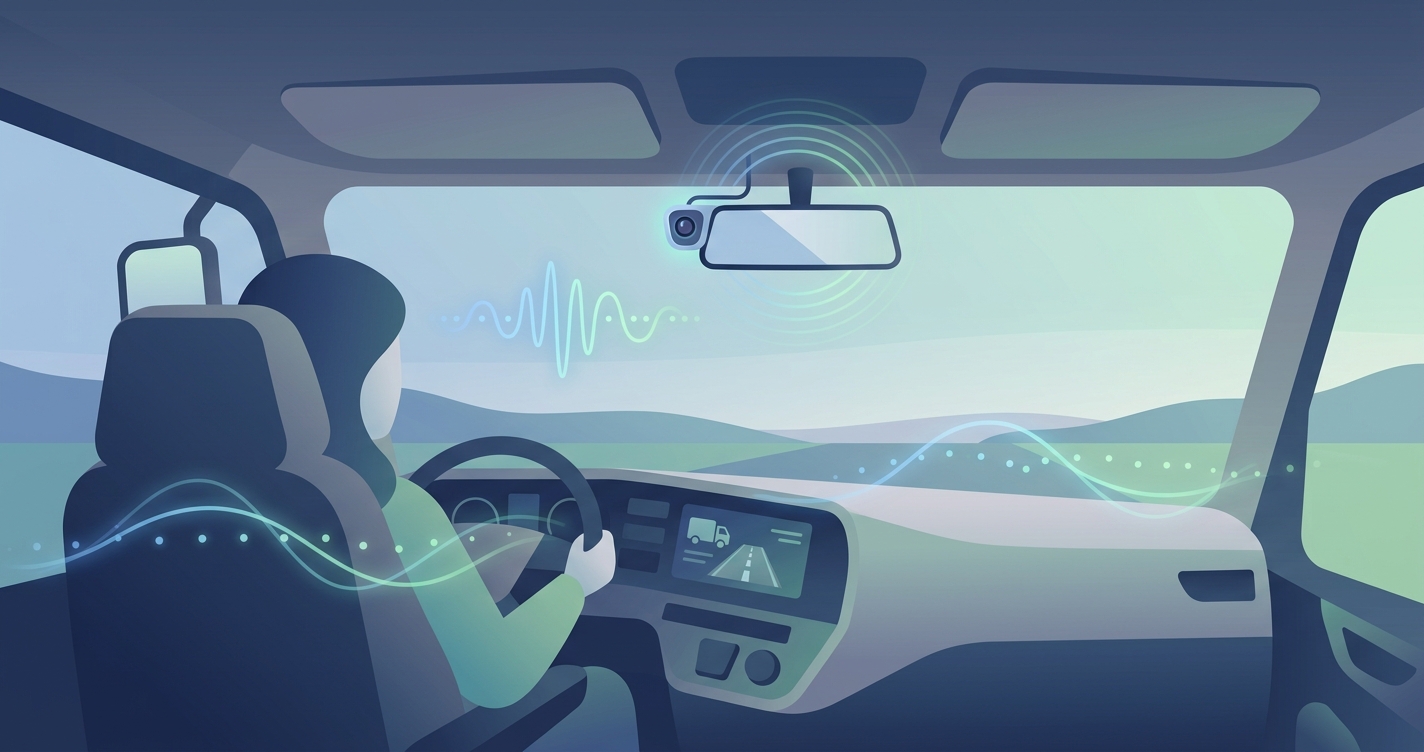
Fleet procurement teams entering 2026 face a buying decision that barely existed five years ago: selecting a fleet driver health monitoring tool that watches not just where a driver looks, but how their body is holding up across a long shift. The category has matured quickly, pushed by tightening regulation, a hardening insurance market, and physiological sensing that now runs on the same inward-facing camera many vehicles already carry. For automotive OEMs, Tier-1 suppliers, and fleet operators, the question is no longer whether to monitor driver health, but which architecture delivers reliable signals without overwhelming safety managers or alienating drivers.
A March 2026 report from the Governors Highway Safety Association estimated more than 6,300 deaths from suspected drowsy driving crashes in 2023, far above official federal counts, and identified long-haul truck drivers as a group at especially high risk.
What fleet driver health monitoring actually covers
Fleet driver health monitoring is an umbrella term, and that breadth is exactly where buyers get confused. At its narrowest, it means drowsiness and distraction detection: the eyelid, gaze, and head-pose analysis that has become the regulatory baseline. At its broadest, it extends into driver vital signs tracking such as heart rate, respiration rate, and stress indicators, plus longer-term fleet driver wellness software that aggregates trends across a roster.
A useful way to frame the buying decision is to separate three layers:
- Behavioral safety signals: eye closure (PERCLOS), yawning, head nods, and distraction events.
- Physiological signals: heart rate, heart rate variability, breathing rate, and signs of acute medical events.
- Wellness and analytics: fatigue trends, fitness-for-duty patterns, and fleet-wide reporting.
Most regulatory pressure today sits in the first layer. The EU General Safety Regulation (2019/2144) phases in driver drowsiness and attention warning requirements, with advanced driver distraction warning obligations applying to new vehicles from July 2026 according to guidance from the European Commission and Capgemini. That mandate is dragging the rest of the category forward, because once an inward-facing camera is required, adding physiological sensing on top of it becomes an incremental cost rather than a new hardware line.
Comparing the main fleet driver health monitoring approaches
No single architecture wins on every axis. The right choice depends on whether you are retrofitting a mixed fleet, specifying a new vehicle platform, or running drivers who already resist surveillance. The table below compares the dominant approaches that fleet safety health tools are built on.
| Approach | What it measures | Driver friction | Retrofit cost | Best fit |
|---|---|---|---|---|
| In-cab camera (rPPG + behavioral) | Drowsiness, distraction, heart rate, respiration, stress | Low (contactless, passive) | Moderate | Mixed fleets wanting both safety and vitals from one sensor |
| Wearable devices | Heart rate, HRV, sleep, body temperature | High (must be worn and charged) | Low per unit, high per driver | Health-focused programs with engaged drivers |
| Steering and vehicle telematics | Lane drift, steering corrections, braking | None (no driver-facing sensor) | Low | Older fleets, privacy-sensitive operations |
| Hybrid camera plus telematics | Behavioral, physiological, and vehicle-dynamics fusion | Low | Higher | Large fleets prioritizing alert accuracy |
A few patterns are worth pulling out of that comparison:
- Camera-based in-cab health monitoring fleet systems are the only single-sensor option that spans both behavioral and physiological layers, which is why they dominate new specifications.
- Wearables produce rich health data but stall on compliance because drivers forget, remove, or stop charging them.
- Telematics-only approaches avoid driver pushback entirely but detect impairment late, after the vehicle has already drifted.
What to look for when buying
The spec sheet rarely tells the full story, so experienced buyers probe past the headline claims. When evaluating driver vital signs tracking and broader fleet driver wellness software, the criteria that separate serious tools from demoware tend to be consistent.
Signal quality in real conditions
A camera that reads heart rate flawlessly in a lab can fail in direct sun, at night under infrared illumination, or when a driver wears sunglasses. Ask vendors how their system performs across lighting transitions, vibration, and varied skin tones, and request validation data rather than marketing figures. Contactless heart rate via remote photoplethysmography (rPPG) is real, but its robustness in a moving cab is the differentiator.
Alert logic and false positives
Safety managers abandon tools that cry wolf. The value of any fleet safety health tool is not in raw detection but in how it converts signals into a small number of trustworthy, actionable alerts. Ask how the system suppresses nuisance warnings and whether thresholds are tunable per route, shift, or driver.
Privacy and driver acceptance
Driver-facing cameras invite resistance. The tools that survive deployment process video at the edge, send only event metadata rather than continuous footage, and give drivers transparency about what is captured. This is increasingly a procurement requirement, not a nice-to-have.
Integration and data ownership
A monitoring tool that cannot feed your existing telematics, safety dashboard, or insurance reporting becomes a silo. Confirm open APIs, clarify who owns the raw data, and check whether physiological trends export cleanly into your wellness reporting.
Industry Applications
Long-Haul Trucking
Long-haul carriers carry the heaviest fatigue exposure and the strictest hours-of-service scrutiny. Here, in-cab health monitoring that combines drowsiness detection with heart rate and respiration trends helps distinguish a driver who is genuinely fatigued from one who is simply blinking in bright light. The FMCSA announced a study in November 2025 examining how commercial driver schedules influence fatigue and crash risk, a sign that schedule-aware health data is becoming central to compliance conversations.
Last-mile and delivery fleets
Delivery operations run short, dense routes with frequent stops, where the risk profile leans toward distraction and acute illness rather than highway microsleep. Contactless vital signs tracking can flag a driver whose resting heart rate is climbing across a shift, an early indicator of illness or strain that scheduling tools never see.
Passenger and shared mobility
Ride-hail and shuttle operators face direct passenger-safety liability. For these fleets, the combination of driver authentication, drowsiness detection, and discreet physiological monitoring supports both safety assurance and a defensible audit trail.
Current research and evidence
The evidence base behind fleet driver health monitoring has shifted from proof-of-concept to deployment-grade. PERCLOS, the percentage of time eyelids are closed, remains the most validated behavioral fatigue metric, with roots in research funded by U.S. transportation agencies. On the physiological side, the FMCSA's Large Truck Crash Causation Study found that 13 percent of commercial drivers were fatigued at the time of their crash, while industry surveys cited by FMCSA report that roughly 65 percent of truck drivers admit to driving drowsy and nearly half have fallen asleep at the wheel.
Camera-based rPPG, the technique behind contactless heart rate and respiration estimation, has accumulated a substantial peer-reviewed literature since the early work of Ming-Zher Poh and colleagues at MIT in 2010, which demonstrated that a standard camera could recover cardiac pulse signals from facial video. The open research challenge for fleets is not whether the signal exists but how reliably it survives motion, vibration, and the lighting extremes of a real cab. Vendors that publish performance under those conditions, rather than only in controlled settings, are the ones worth shortlisting.
The future of fleet driver health monitoring
Three forces will shape the next 24 months. First, regulation: the EU General Safety Regulation pushes driver attention monitoring into mainstream hardware by July 2026, normalizing the inward-facing camera that physiological sensing rides on. Second, sensor fusion: the most accurate systems will blend camera, vehicle-dynamics, and schedule data so that a single fatigue alert reflects multiple converging signals rather than one noisy input. Third, the shift from reactive alerts to predictive wellness, where fleet driver wellness software flags rising fatigue or illness risk before it becomes an in-cab emergency.
For buyers, the practical takeaway is to specify architectures that can grow into the physiological and predictive layers without ripping out hardware. A camera platform chosen for drowsiness compliance in 2026 should be capable of adding vital signs tracking and wellness analytics as the program matures.
Frequently asked questions
What is the difference between fleet driver health monitoring and driver monitoring systems?
A driver monitoring system (DMS) typically refers to behavioral safety: drowsiness and distraction detection mandated by regulators. Fleet driver health monitoring is broader, adding physiological signals such as heart rate and respiration plus wellness analytics across an entire roster.
Can a camera really measure a driver's vital signs without contact?
Yes. Remote photoplethysmography (rPPG) extracts subtle color changes in facial skin caused by blood flow, allowing a camera to estimate heart rate and respiration without any worn sensor. Reliability in a moving cab depends heavily on the system's handling of motion and lighting, so request real-world validation.
How do these tools handle driver privacy concerns?
Well-designed systems process video at the edge inside the vehicle, transmit only event metadata rather than continuous footage, and disclose to drivers what is captured. Privacy-by-design has become a standard procurement requirement rather than an optional feature.
Which approach is best for a mixed-age fleet?
Camera-based platforms generally offer the strongest balance because a single contactless sensor covers both behavioral and physiological monitoring with low driver friction. Older vehicles without driver-facing cameras can be retrofitted, while telematics fusion adds vehicle-dynamics context.
Circadify is building toward this space directly, developing camera-based driver fatigue, drowsiness, and stress detection for in-cabin monitoring. Fleet management companies evaluating their 2026 options can request pricing and explore an automotive cabin program to see how contactless health sensing fits an existing fleet architecture.