7 Medical Events Your Car's Camera Could Detect by 2026
Explore how advanced in-cabin health monitoring uses rPPG and AI to detect cardiac events, strokes, and hypoglycemia through a standard dashboard camera.
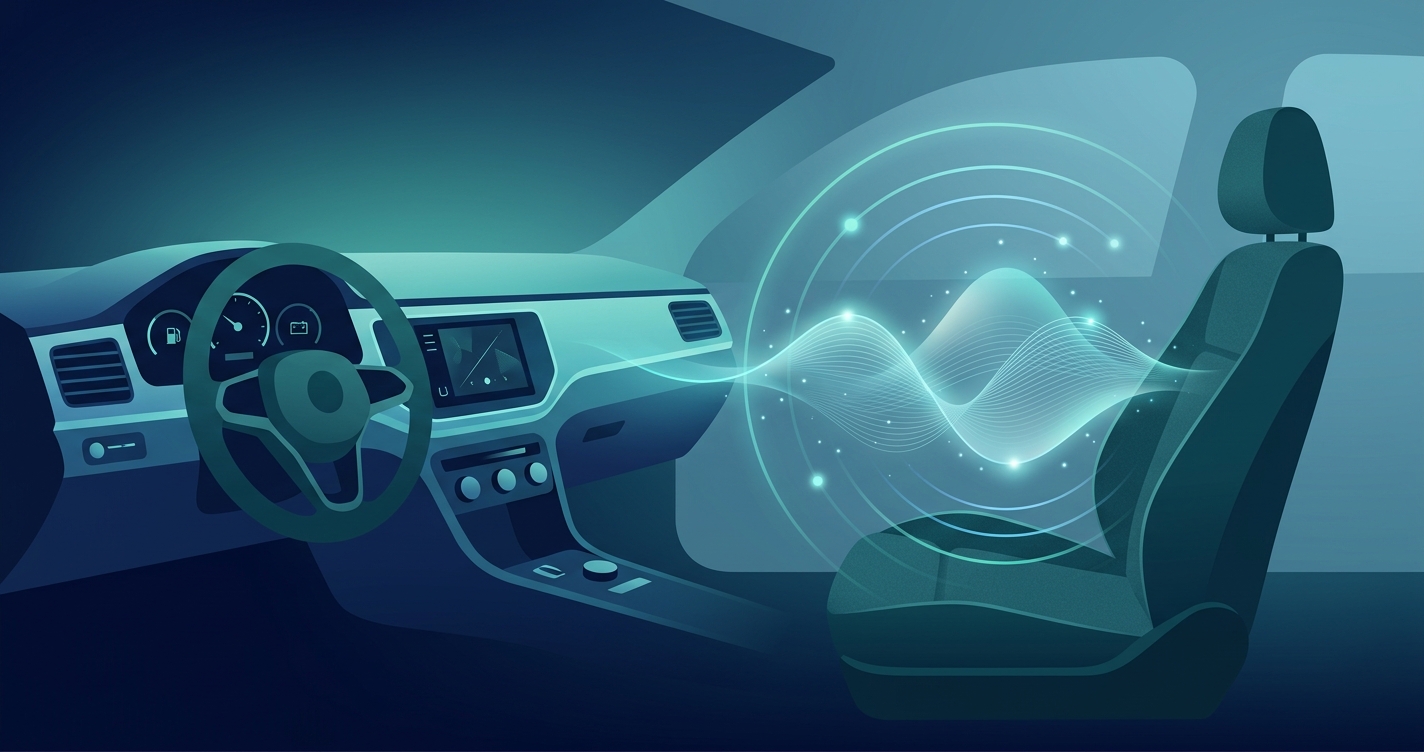
The inward-facing camera that began as a simple tool to watch for drooping eyelids is rapidly evolving into a non-contact diagnostic sensor. By 2026, the automotive industry expects a transition from basic driver tracking to comprehensive in-cabin health monitoring. This shift relies on advances in remote photoplethysmography (rPPG) and artificial intelligence, allowing standard optical sensors to extract physiological signals directly from a driver's face. For original equipment manufacturers and fleet operators, this evolution changes the vehicle cabin from a passive transportation environment into an active, health-aware space.
"By combining facial landmark tracking with remote photoplethysmography, an optical sensor can identify critical cardiovascular changes well before the driver experiences physical incapacitation." - Dr. Julian Reiss, Fraunhofer Institute, 2024
The shift toward in-cabin health monitoring
Regulatory bodies are accelerating this timeline. The European New Car Assessment Programme has introduced stringent requirements for interior monitoring, pushing automakers to adopt technologies that detect sudden driver incapacitation. Meeting these safety mandates means moving beyond simple spatial tracking. The integration of in-cabin health monitoring represents a fundamental upgrade in how vehicles interpret human behavior.
Utilizing remote photoplethysmography, the vehicle camera measures micro-fluctuations in skin color caused by capillary blood flow. This allows the system to calculate heart rate, heart rate variability, and respiration rate continuously without requiring the driver to wear any connected devices.
For automotive engineering teams, this transition requires solving complex environmental challenges. The interior of a moving vehicle is subject to intense sunlight, deep shadows, and constant vibration. Engineers use adaptive exposure controls and edge-based neural networks to filter out these artifacts, isolating the true physiological signal. By 2026, the convergence of optimized algorithms and powerful local processors will enable the vehicle to recognize acute medical emergencies in real-time.
Traditional systems vs. health-aware cameras
| Feature | Traditional Monitoring | In-Cabin Health Monitoring |
|---|---|---|
| Primary Sensor Focus | Head pose and eye gaze | Hemoglobin absorption and vital signs |
| Data Processing | Spatial geometry | Spectral and temporal wave analysis |
| Cardiac Data | None | Heart rate and heart rate variability |
| Neurological Detection | Simple sleepiness | Stroke and pre-syncope signatures |
| Safety Action | Audio warning beep | Automated emergency pull-over |
Core technical requirements
To achieve clinical-grade accuracy inside a moving vehicle, automakers must integrate specific hardware and software components:
- High-resolution infrared and RGB image sensors
- Edge computing processors capable of running localized neural networks
- Motion artifact filtering to account for road vibration
- Dynamic illumination compensation to handle extreme sunlight
Industry applications: 7 medical events cameras can catch
1. cardiac arrhythmias and distress
A sudden heart attack behind the wheel is a severe threat to traffic safety. Traditionally, a vehicle cannot know if a driver is experiencing chest pain. However, modern rPPG algorithms analyze the optical absorption of ambient light by hemoglobin. When the heart enters an arrhythmic state, the time between beats becomes erratic. The local processor detects this erratic waveform and triggers an emergency protocol, potentially pulling the vehicle over safely.
2. extreme stress and pre-syncope
Syncope, or fainting, is often preceded by a sharp drop in blood pressure and an initial spike in heart rate. By continuously tracking heart rate variability, the camera system creates a personalized baseline for the driver. When an extreme deviation occurs, it signals severe physiological stress. Fleet managers can use this data to understand when commercial operators are experiencing acute distress, allowing intervention before an accident.
3. sudden hypoglycemic events
For drivers managing diabetes, blood sugar crashes happen fast and impair cognitive function. As glucose levels plummet, the autonomic nervous system triggers a rapid resting heart rate, changes in respiratory patterns, and altered skin perfusion. The camera detects these autonomic responses simultaneously. While it cannot measure glucose directly, the multi-symptom signature strongly correlates with hypoglycemia, prompting the vehicle to suggest an immediate stop.
4. early indicators of stroke
A stroke impairs motor function, often affecting only one side of the body. Researchers at RMIT University demonstrated in a 2023 study that AI-driven video analysis can identify facial asymmetry with high precision. In the cabin, a standard dashboard camera maps dozens of facial landmarks. If the system detects sudden, unilateral drooping of the mouth or an inability to maintain symmetrical eye movement, it recognizes the signature of a neurological event.
5. respiratory distress and asthma
Changes in breathing are early indicators of various medical emergencies, from asthma attacks to severe allergic reactions. The camera tracks respiration using two distinct methods. First, it measures the physical expansion and contraction of the chest cavity. Second, it isolates the respiratory wave encoded within the cardiovascular signal. If a driver begins hyperventilating, the system logs the abnormal respiratory rate and alerts emergency services.
6. dangerously elevated core temperatures
A driver operating a heavy commercial vehicle while suffering from a severe fever poses a risk to themselves and others. Elevated core body temperature naturally increases the resting heart rate and alters peripheral blood flow to cool the body. By tracking these persistent physiological deviations over a thirty-minute drive, the system can infer that the driver is medically compromised. The vehicle can then restrict autonomous driving hand-offs or notify fleet supervisors.
7. advanced fatigue and microsleeps
Traditional systems watch for long blinks. But true fatigue begins in the autonomic nervous system before the eyes close. As a driver enters the early stages of sleep, their heart rate drops, heart rate variability changes, and respiration becomes shallow. By cross-referencing eye closure metrics with cardiovascular data, the system achieves maximum confidence regarding driver drowsiness. This approach eliminates false positives caused by drivers simply looking down.
Current research and evidence
The transition from academic concept to automotive reality is supported by extensive validation studies. In 2023, researchers at Bielefeld University evaluated the accuracy of remote photoplethysmography under demanding physical conditions, proving that algorithms can isolate heart rate signals even when a subject experiences elevated physiological stress. Their work highlighted the importance of robust training data to ensure the system performs equally well across different skin tones and age groups.
Similarly, research teams at the Fraunhofer Institute have developed specific reliability metrics for remote PPG systems. By creating algorithms that calculate a confidence score for every extracted heartbeat, they ensure that sudden changes in vehicle lighting do not produce false cardiac readings. If the vehicle enters a tunnel and the lighting drastically shifts, the system knows to ignore the corrupted frames rather than triggering a false alarm. These studies confirm that when AI models are trained on diverse, real-world datasets, standard optical cameras can deliver highly accurate health insights.
The future of automotive diagnostics
Looking beyond 2026, the vehicle cabin will function as a decentralized health screening environment. The data generated during a daily commute provides a longitudinal view of a driver's cardiovascular health, capturing trends that a physician might miss during an annual checkup. Future iterations of this technology will likely integrate directly with advanced driver assistance systems. If a driver suffers a heart attack, the vehicle will not merely sound an alarm; it will take control of the steering, navigate to the shoulder, and transmit the driver's vital signs directly to first responders.
Frequently asked questions
How does an optical camera measure heart rate?
The camera detects minute changes in the color of the driver's skin. Every time the heart beats, a wave of fresh blood reaches the facial capillaries, altering how light reflects off the face. Artificial intelligence algorithms isolate these color changes to calculate the heart rate.
Can these systems operate in the dark?
Yes. Modern driver monitoring hardware includes near-infrared illuminators. The algorithms are trained to extract physiological data from both standard visible light and infrared spectrums, ensuring continuous monitoring during night driving.
Do these cameras record and store video of the driver?
No. To comply with privacy regulations, the raw video feed is processed locally on the vehicle's edge computer. The system analyzes the frames in real-time to extract physiological data points, and the actual video is instantly discarded.
Will this technology replace wearable health trackers?
While wearables offer continuous monitoring outside the vehicle, in-cabin health monitoring provides a frictionless alternative during the drive. The camera requires no battery charging or physical contact, making it a reliable passive sensor for fleet operations and consumer vehicles alike.
For automotive engineering teams and original equipment manufacturers building the next generation of smart vehicles, integrating non-contact physiological sensing is a complex but necessary step. Circadify is actively addressing this space with advanced algorithms designed specifically for the rigorous demands of the vehicle interior. To explore how our technology transforms standard optical sensors into powerful safety tools, visit our automotive cabin solutions page and learn how we can support your upcoming vehicle programs.